Built-in appliances sit in tight openings. Overflow water runs underneath your unit, behind it into the wall, and sideways under the cabinet toe kicks where you cannot see it.
Service · Chula Vista, CA
Appliance Overflow Water Damage in Chula Vista, CA
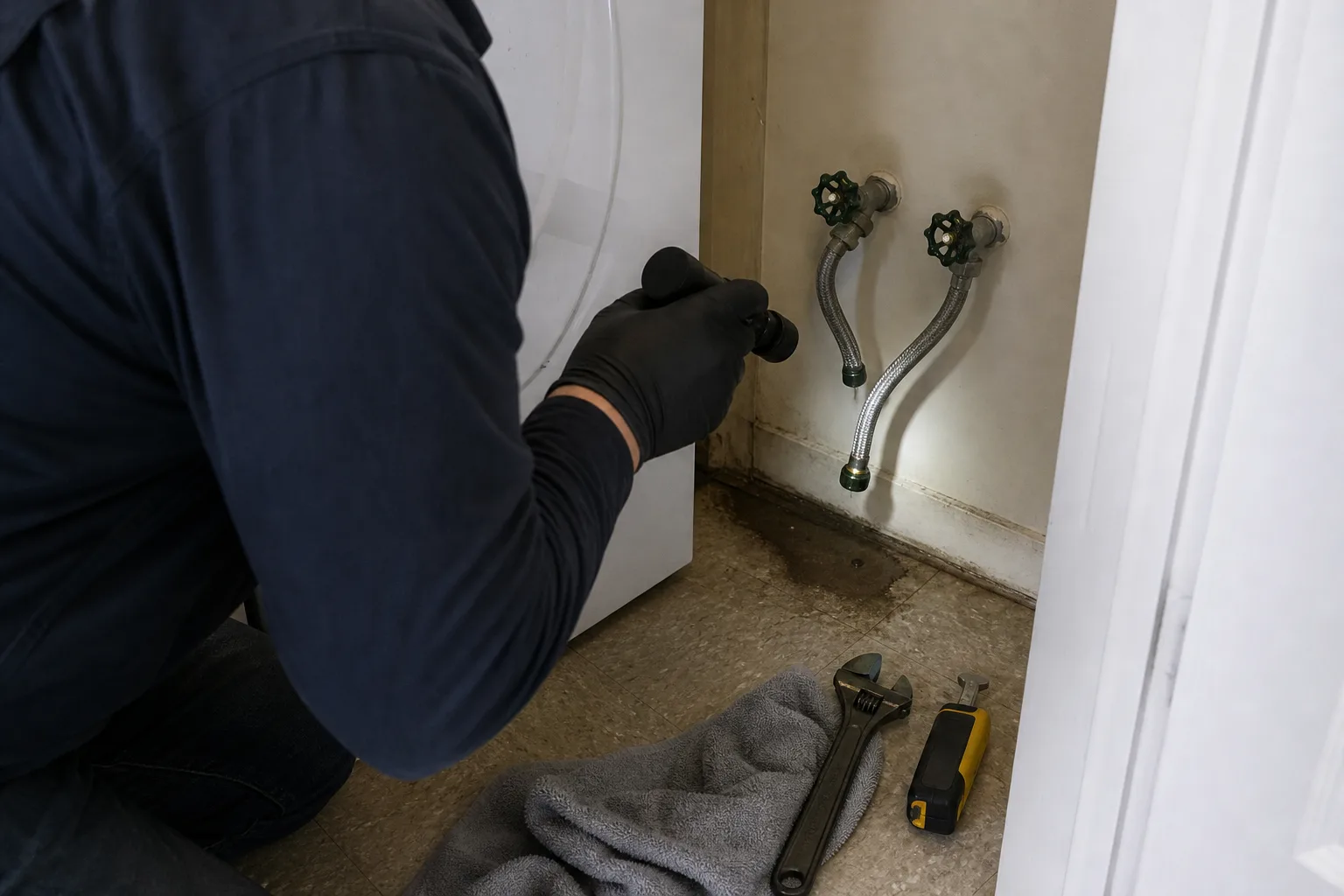
Water is escaping from under an appliance, running across the kitchen or laundry floor, or soaking the cabinet alongside it. Appliance overflow water damage happens when a fill valve sticks open, a float switch fails or a drain line clogs, and the machine keeps sending water onto your floor. Stop the appliance, close the valve behind it, and call about the water in your Chula Vista home.
What you are seeing
Three ways an appliance floods a floor
Every water-using appliance in your home has a way in, a way out and a control that decides when to stop filling. Your overflow means one of the three has failed.
- Valve stuck open
The solenoid inlet valve that lets water in fails to close, so the unit keeps filling past its limit.
- Float switch failed
The float that senses the water level sticks or breaks, and the unit never gets the signal to stop.
- Drain blocked
A bent line, a clogged trap or a full air gap pushes the outgoing water back out of the machine.
- Loose connection
A compression nut or plastic fitting behind the unit works loose and leaks into the wall cavity.
The same failures turn up in dishwashers, ice makers, washers, water heaters, softeners and filter systems, so the same first moves stop any of them.
If an appliance is still filling or spilling, switch it off, close the valve behind it, and call about the water.
(619) 927-7782Triage order
Stop the machine, then the water
Mind the socket
If the floor around the appliance is dry, switch it off at its own controls. If the socket is wet, leave it alone and mention it on the call.
Close the stop valve
Turn the small stop valve behind or beneath your unit until it stops; if it is out of reach, shut off the house supply.
Pause the drain
Hold off on other fixtures tied into that drain until a plumber clears the clog.
Clear the floor
Lift rugs, slide out your low drawers and carry stored items away from the water.
Keep the failed part
Leave the valve, float or fitting where it is and take a photo of it.
How it works
Why water collects under cabinets and behind the machine
Your cabinet bases are often particleboard, which swells and loses strength once it soaks up water. Vinyl plank or laminate running under your cabinets traps the water against the concrete below it.
Water from an appliance drain carries soap, food and grease, so it starts dirtier than water from a supply connection.
Technique
Drying the spaces behind a built-in unit
- Moving the unit
The appliance comes out of its opening so the floor and wall behind it can dry.
- Toe-kick access
Removing the kick plates under the cabinets lets air reach the water trapped below them.
- Cabinet interiors
Moisture meters check the cabinet bottoms, the sides and the wall behind them.
- Under the flooring
Readings beneath vinyl plank or laminate show whether water reached the concrete.
On the call, name the appliance, say whether it overfilled or leaked from the back, and mention whether the water reached the cabinets or another room.
Local detail
Kitchens and laundry rooms on slab-on-grade
Many older west-side Chula Vista houses rest on concrete slab-on-grade foundations. If yours is one, water that slides under your kitchen flooring lies on bare concrete, so drying protocol measures beneath the floor, not only its surface.
Phase order
What happens before the cabinets dry
The appliance stays off and its valve stays closed until someone replaces the failed part. Then the standing water comes out, the cabinets and the wall behind the unit dry, and the flooring dries last because it traps water against the concrete.
Particleboard that swelled may not recover, and the readings decide which of your materials can stay. Each one needs a dry reading before you put anything back.
Drying metrics
Is the appliance really the source?
Look under your unit once its power and water are both off. Fresh water after that points to a line in your wall or an adjacent fixture, not the appliance itself.
Scope: Emergency extraction and structural drying clearance only. Structural rebuild and finishing carpentry are contracted separately.
Service area
Chula Vista ZIP codes
- 91909
- 91910
- 91911
- 91912
- 91913
- 91914
- 91915
- 91921
Every responding technician is independent. Before work begins, confirm the technician's license, insurance and pricing with them directly.
Common questions
Appliance overflow questions
Is it safe to run the appliance again once the floor dries?
Leave it off until someone replaces the failed valve, float or drain line. A stuck valve can fail the same way on the next run.
Should you pull the appliance out yourself?
Slide it out only if it moves freely and you have its power and water off. Forcing a heavy or built-in unit can strain its connection or crack your flooring.
What should you know before calling about an appliance leak in San Diego County?
Know which appliance failed, where the water came from, whether it was clean supply water or drain water, and how far it spread.
Water damage keeps spreading until it is dried.
Call and describe the damage in Chula Vista: where the water came from, what is wet and how long it has been there.