Water near floor boxes, power strips, server racks or the electrical room can energize a wet floor. Keep staff and visitors out of the wet zone, and note which equipment the water reached for the call.
Service · Chula Vista, CA
Commercial Water Damage in Chula Vista, CA
Water is spreading under carpet tiles, dripping through a suspended ceiling or pooling outside a restroom in your office, shop or warehouse. Commercial water damage travels under modular walls and across shared slabs, and every wet room can take part of your business offline. Close the shutoff for your space, keep staff away from wet equipment, and call about the commercial water damage at your Chula Vista property.
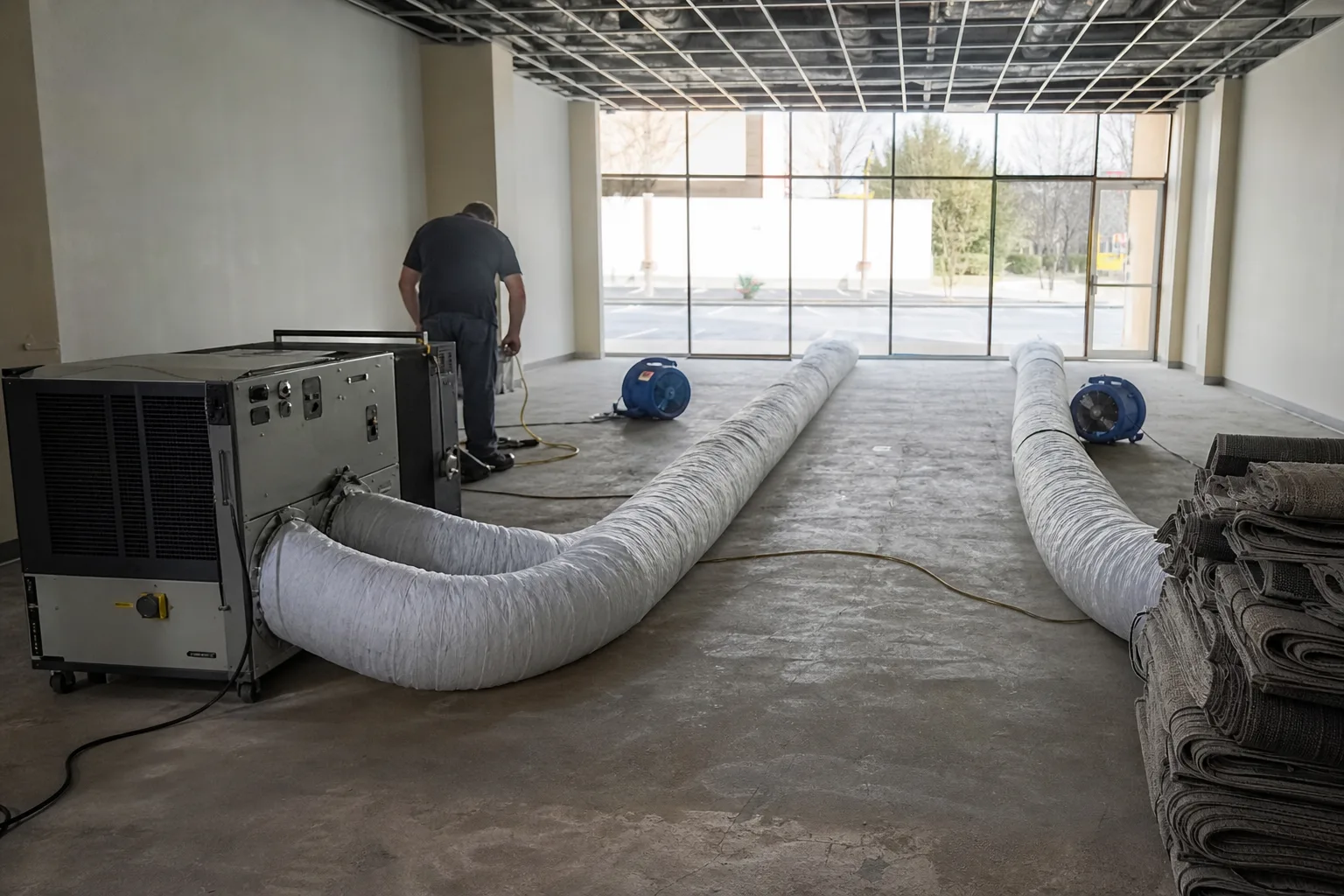
What you are seeing
Where water shows up in a commercial space
Commercial buildings hide their plumbing above ceiling grids, inside utility closets and behind restroom walls, so the first sign often appears far from the source.
- Stained ceiling tiles
A drain line, a roof drain or a sprinkler pipe above the grid is leaking onto the tiles.
- Wet carpet tile
Water is running across the slab under the tiles and wicking into their backing.
- Water at the restroom door
A flush valve, supply line or floor drain in the restroom has failed.
- Puddles by a utility closet
A water heater, filter or condensate line inside the closet is draining onto the floor.
- Water at the dock or rear door
Runoff or a blocked roof drain is pushing in at the back of the building.
Safety protocol
Protect people, power and records first
Lift files, inventory and electronics off the floor and away from the water. Wet ceiling tiles can drop without warning, so clear the floor under any tile that sags or drips.
If water is still reaching equipment or a neighboring suite, close your shutoff, call the building engineer, and then call about the damage.
(619) 927-7782Triage order
Who to reach in a leased or owned building
Building engineer or property manager
They control the risers, the main and the sprinkler shutoff in a multi-tenant building.
Your own suite shutoff
If the leak sits inside your space, close the valve for the suite or the fixture.
Neighboring tenants
Warn the suites beside and below you, because a shared slab and a shared ceiling space carry water past your walls.
Your business records
Photograph the wet zones, the source and any damaged stock or equipment, and note when staff found the water.
How it works
How water travels through commercial construction
Most offices and shops sit on a concrete slab with metal-stud walls and a suspended ceiling. Water runs across the slab under carpet tile and rubber wall base, and gypsum board on metal studs wicks it upward from the bottom track.
Above the grid, the open plenum lets water travel along ducts, cable trays and pipes before it drops through a tile. A leak above one office can surface several rooms away, or in the suite next door.
Local detail
Dock doors and May Gray
Overcast ocean air drifts inland from San Diego Bay through spring and early summer, the season of May Gray and June Gloom. Rolling up the dock door of a Chula Vista warehouse only pulls that humid air across your wet slab, so request dehumidification and drying-goal verification.
Technique
Drying a business in zones
- Zoned containment
Plastic barriers separate the wet area so the dry part of your business can keep working.
- Carpet tile lifting
Wet tiles come up in sections so the slab underneath can dry, and dry tiles stay put.
- Wall base and bottom track
Pulling the rubber base, or drilling small holes along the bottom track, lets air reach inside metal-stud walls.
- Plenum and grid
Soaked tiles come down so air movement reaches the deck and the space above the grid.
- Equipment placement
Dehumidifiers and air movers go where they keep aisles, exits and work areas clear.
When you call, give the size of the wet area, whether the building has other tenants, and which hours your space needs to stay open.
Phase order
Getting each zone back in use
Drying moves zone by zone, starting where the water entered and working outward. A zone returns to use once its slab, walls and ceiling read like the dry parts of the building.
Pulling wet carpet tile and soaked ceiling tiles early shortens drying for the slab and walls beneath them. Areas with metal-stud walls tend to dry ahead of rooms with wood framing or built-in millwork.
Scope: Emergency extraction and structural drying clearance only. Structural rebuild and finishing carpentry are contracted separately.
Service area
Chula Vista ZIP codes
- 91909
- 91910
- 91911
- 91912
- 91913
- 91914
- 91915
- 91921
Every responding technician is independent. Before work begins, confirm the technician's license, insurance and pricing with them directly.
Common questions
Commercial water damage questions
Can part of your business stay open during drying?
Often, yes. Containment around the wet zone keeps equipment and dust away from the dry areas, so say which areas you need to keep running.
Who decides on the work in a leased space?
Your lease sets who handles which parts of the building, so tell your landlord or property manager in writing. Stopping the water and drying the wet materials still come first.
What details help on a San Diego County commercial water call?
The type of business, the size of the wet area, whether other tenants share the building, the source of the water and whether it is off.
Water damage keeps spreading until it is dried.
Call and describe the damage in Chula Vista: where the water came from, what is wet and how long it has been there.