Stay out of the wet rooms of your home, and keep clear of outlets and fixtures the water reached.
Service · Chula Vista, CA
Condo and Apartment Water Damage in Chula Vista, CA
Your water heater is leaking, the washer hose burst, or the dishwasher has soaked your kitchen floor, and now the unit below reports water on their ceiling. Condo and apartment water damage rarely stays in one unit, because the floor you stand on is the ceiling of the home underneath. Close your unit's shutoff, tell management and the neighbor below, and call about the water in your Chula Vista building.
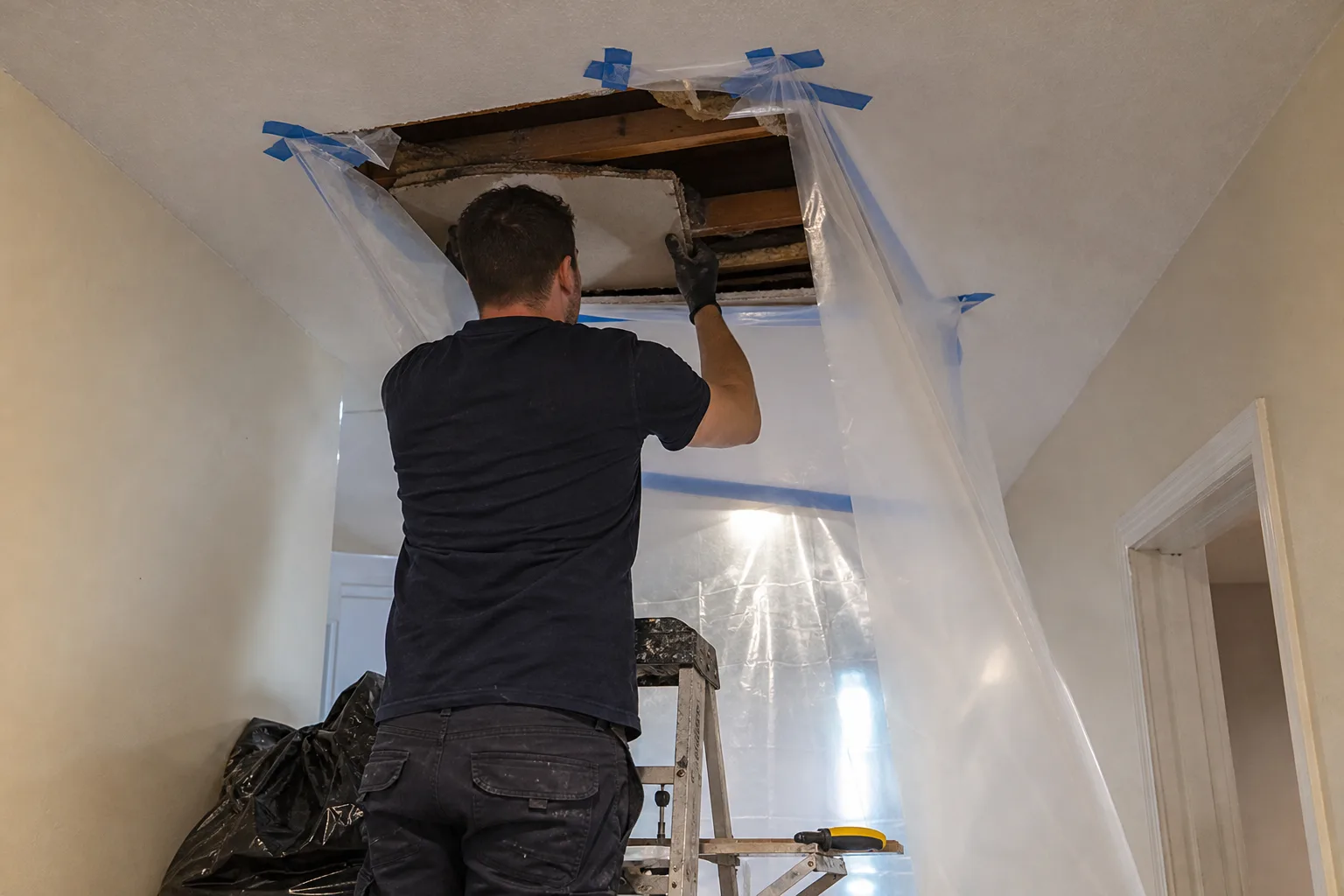
What you are seeing
When the leak starts in your unit
In a condo or apartment, your appliances sit on a floor that doubles as a neighbor's ceiling. Water that would spread across a slab in a house soaks into that floor and heads down.
- Water heater
The tank or its relief valve is spilling onto the floor around it.
- Laundry hookups
A washer fill hose or the drain standpipe has let go.
- Kitchen appliances
A dishwasher, ice maker line or sink supply has been seeping under the cabinets.
- Balcony door
Water from a deck above or a clogged deck drain is crossing the threshold.
- A neighbor rings your bell
The home below or beside you sees water before you do.
Safety protocol
Your electricity and the neighbor's ceiling
Warn the neighbor below to stay away from anything electrical in their ceiling and from drywall that bows downward. Never push water toward an outlet or a floor register, where it can run into wiring or ductwork.
If water from your unit is still reaching the home below, close your shutoff and tell management now, then call about the damage.
(619) 927-7782Triage order
Who to tell, and how
Close your shutoff
Try the valve on the cold line at the water heater or under the kitchen sink; if you cannot find one, ask management to close the building valve.
The neighbors below and beside
Say what failed so they can move furniture and rugs out of the wet area.
Management, landlord or HOA
Report it in writing with the time you found it, since the association and each owner answer for different parts of the building.
If you rent
Tell your landlord in writing even if the manager has heard, and photograph your own furniture, rugs and clothing that got wet.
If you own
Pull out your association's CC&Rs to see who handles the floor, walls and pipes between units.
How it works
What happens inside the floor between units
The floor between units is a layered assembly: finish flooring, a sound mat or underlayment, a wood subfloor or concrete topping, then the framing or deck and the ceiling of the unit below. Each layer can trap water the others conceal.
Sound mats and foam underlayment trap water against the subfloor, so your floor can look dry while the layers under it stay soaked. Water that reaches the neighbor's ceiling spreads across the back of their drywall before it drips.
Local detail
Balcony doors and May Gray
Overcast, damp ocean air rolls in off San Diego Bay for much of the year, heaviest in the stretch locals call May Gray and June Gloom. A sliding door left open in a Chula Vista condo lets that air in rather than drying your floor, so request dehumidifiers and moisture readings.
Technique
Drying a floor that is also a ceiling
- Flooring lift
Sections of vinyl plank, laminate or carpet come up so air can reach the underlayment and subfloor.
- Underlayment removal
A soaked sound mat or foam pad usually comes out, because it holds water longer than the floor it protects.
- Readings in both homes
Moisture readings in your floor and the ceiling below show how far the water went.
- Entry next door
Drying the ceiling below means equipment in your neighbor's home, so the manager or owner arranges entry.
When you call, mention whether you own or rent, what failed, and whether the home below or beside you shows water.
Phase order
Your floor first, the ceiling below second
Drying starts in your unit, where the water entered, because a wet floor keeps feeding the ceiling below until it dries. The neighbor's ceiling reaches a dry reading after yours.
Concrete toppings and gypsum underlayment in newer buildings hold water longer than wood subfloors. Say whether your floor feels hard and cold underfoot or flexes a little.
Scope: Emergency extraction and structural drying clearance only. Structural rebuild and finishing carpentry are contracted separately.
Service area
Chula Vista ZIP codes
- 91909
- 91910
- 91911
- 91912
- 91913
- 91914
- 91915
- 91921
Every responding technician is independent. Before work begins, confirm the technician's license, insurance and pricing with them directly.
Common questions
Condo and apartment questions
Does the unit owner or the HOA handle the floor between units?
Your CC&Rs and bylaws divide that responsibility, and the answer varies by building. Report the leak in writing and keep your photos; drying still has to start where the water entered.
Should a renter call about water damage or wait for the landlord?
Tell your landlord in writing first, and protect your own belongings. If water keeps spreading and nobody answers, call to describe the damage.
What helps on a San Diego County condo or apartment call?
Your floor level, whether you own or rent, what failed, whether the home below or beside you is wet, and whether the manager has heard.
Water damage keeps spreading until it is dried.
Call and describe the damage in Chula Vista: where the water came from, what is wet and how long it has been there.