Water inside a ceiling light or exhaust fan can short the circuit. Leave the wall switch alone and mention the wet fixture on the call.
Service · Chula Vista, CA
Condo and Multi-Family Bathroom Leaks in Chula Vista, CA
Water is dripping from your bathroom ceiling, a stain is spreading around the fan or light, or the wall behind your toilet feels wet, all from the unit above. Condo and multi-family bathroom leaks travel down the plumbing stack and shared wall chases, so one failed toilet seal or shower pan can reach several floors. Tell the upstairs neighbor and management, keep away from wet light fixtures, and call about the leaks in your Chula Vista unit.
What you are seeing
Water arriving from the unit overhead
In a multi-story building, bathrooms stack on top of each other so they can share drain and supply lines. When a toilet seal, shower pan, tub drain or supply line fails upstairs, the water follows those pipes down into your ceiling and walls.
- Ceiling drip
Water falling around the exhaust fan, the light or a seam in the drywall.
- Sagging drywall
A bulge in the ceiling that holds water and may drop.
- Wet wall chase
A damp patch on the wall that hides the plumbing stack, often behind the toilet or vanity.
- Common-area stains
Marks on a hallway ceiling or in a utility closet that shares the same chase.
Safety protocol
Keep clear of the light fixture and the sag
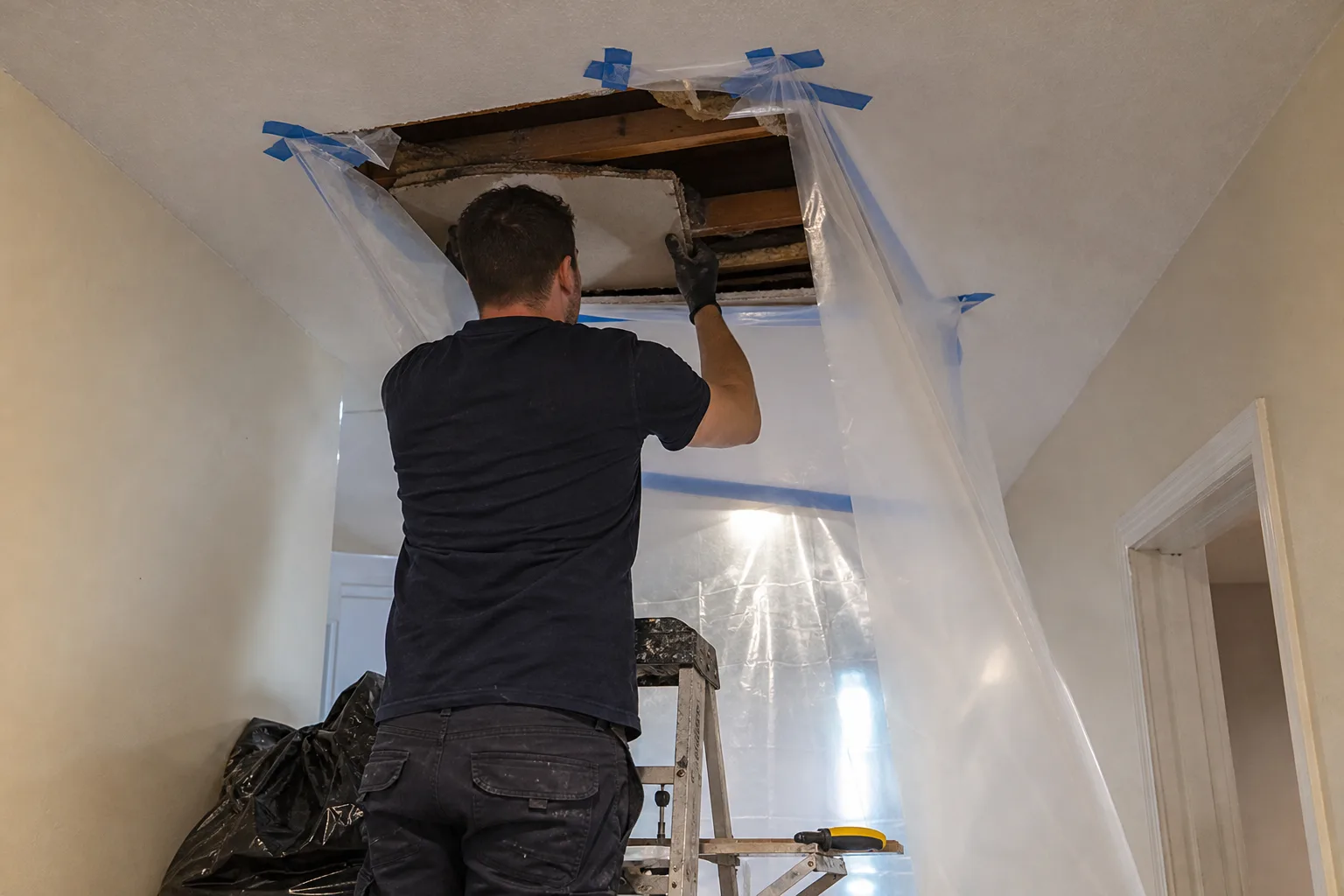
A sagging ceiling can drop wet drywall and insulation without warning. Keep everyone out of the bathroom, and set a bucket only where you can reach it without standing under the bulge.
If water is still coming through your ceiling, alert the unit above and management now, then call about the leak.
(619) 927-7782Triage order
Who to alert, in this order
The unit above
Knock or call the upstairs neighbor and ask them to stop using the bathroom and close the toilet or fixture valve.
Building management or the HOA
Report the leak so they can reach an empty unit or shut off water to the stack.
Your own unit
Stay clear of wet fixtures, move belongings out, and lay towels along the wet wall.
Your records
Take dated photos of the ceiling, the walls and anything damaged, and keep every message with neighbors and management.
How it works
How water moves between floors
Water from an upstairs bathroom does not drop straight down. It runs along joists and pipes until it finds an opening, so it often surfaces at a light fixture, a fan or a drywall seam some distance from the actual leak. Vertical stacks and wall chases give water a path through several floors at once.
A leak on the third floor can wet the second-floor ceiling and the ground-floor chase, while the unit in between shows only a faint stain. Water from a toilet or a drain line is not clean water, even when it looks clear.
Local detail
Small bathroom windows and the marine layer
Much of the year a marine layer of cool, moist air hangs along the San Diego coast and bay, thickest in May and June. A bathroom with a small window will not dry on outside air in Chula Vista, so it needs mechanical drying, checked with moisture readings.
Technique
Drying ceilings and shared walls
- Tracing across units
Moisture readings follow the water from the source unit through each floor and down the chase.
- Ceiling drying
Wet ceiling drywall that stays firm can dry in place; sagging or crumbling sections come down for safety.
- Chase access
Small openings or access panels in the chase let dry air reach the pipes and framing inside.
- Coordinated drying
Equipment may run in more than one unit at once so the shared floor and wall assemblies dry together.
On the call, say which floor you live on, which unit the water came from, and whether building management already knows.
Phase order
Each unit dries once the source stops
Someone has to shut off and fix the fixture or line in the source unit first. Then extraction and drying move from the top down, because water keeps draining toward the lower units until the upper assemblies dry.
Readings in your unit can lag behind the unit above, since water keeps arriving from overhead. The drying ends when your ceilings and walls read like a dry room.
Scope: Emergency extraction and structural drying clearance only. Structural rebuild and finishing carpentry are contracted separately.
Service area
Chula Vista ZIP codes
- 91909
- 91910
- 91911
- 91912
- 91913
- 91914
- 91915
- 91921
Every responding technician is independent. Before work begins, confirm the technician's license, insurance and pricing with them directly.
Common questions
Condo and multi-family leak questions
Who is responsible when water comes from the unit above?
That depends on your building's governing documents and where the leak started, so keep records and tell management. Those questions do not change what has to happen first: stopping the source and drying the wet materials.
What if the unit above is empty?
Tell building management at once. They can reach the unit or shut off water to the stack.
Can a leak above reach the units beside you?
Yes. Shared chases and floor assemblies can carry water sideways into a neighbor's bathroom or closet, so let the units next to yours know.
What details help a San Diego County condo leak call?
Your floor, the unit the water came from, whether management knows, and which rooms in your unit are wet.
Water damage keeps spreading until it is dried.
Call and describe the damage in Chula Vista: where the water came from, what is wet and how long it has been there.