Water near outlets, panels or equipment can energize a wet floor in any building. Keep everyone out of the wet area, and mention the equipment on the call so the crew can coordinate a safe power disconnection.
Service category · Chula Vista, CA
Property-Specific Water Damage in Chula Vista, CA
Water is spreading from a unit above, across a shared wall, through a house nobody lives in or onto the floor of your business. Property-specific water damage turns on who controls the shutoff and who else shares the walls, floors and ceilings around the wet area. Stop the source you can reach, warn the people next to it, and call to describe your property in Chula Vista.
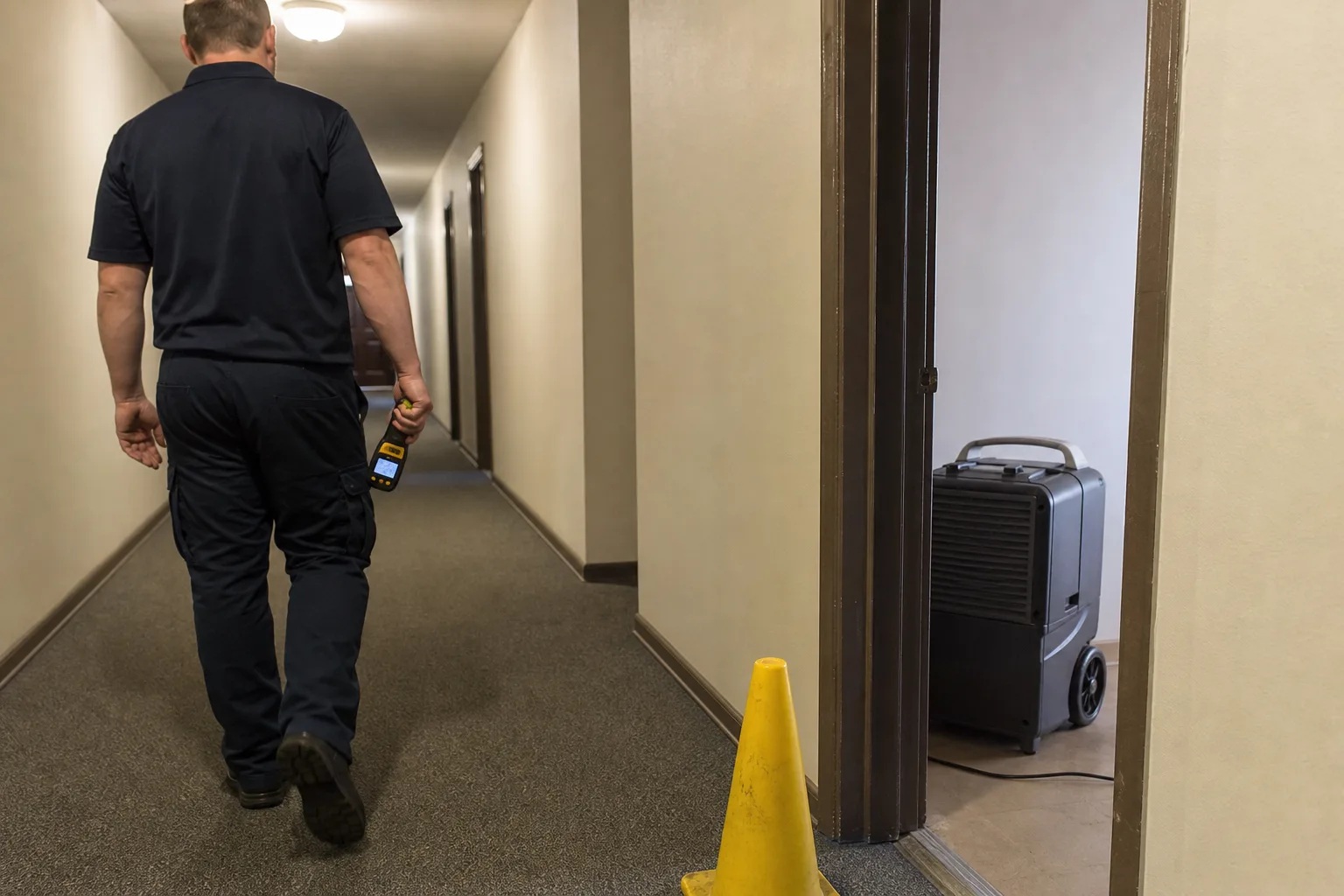
What you are seeing
Who controls the water reaching you?
On any property, the first question is not how much water you see but who can stop it. Match your situation to one of these:
- You own and live in the home
The main shutoff is yours. Close it, then turn to the wet rooms.
- You rent
Close the fixture valve or the main if you can reach it, and tell your landlord or manager in writing.
- You share walls or floors
Water from a neighbor needs their valve, or the building's, before anything in your space can dry.
- You own a rental or an empty house
You may live far from it. Get someone you trust onto the site to close the main.
- You run a business
Know where your suite shutoff sits and who in the building controls the risers and the sprinkler line.
Choose your situation
Choose the situation that matches yours
- Commercial Water DamageOffices, warehouses and suites: water under carpet tile and ceiling grids reaches equipment, records and the next tenant.
- Condo and Apartment Water DamageA leak in your unit soaks the floor between homes and reaches the neighbor below or beside you: shut off, alert, call.
- Vacant and Seasonal Home Water DamageA leak in an empty house can run unseen for weeks: close the main, work out how long it ran, and call about the damage.
- Investment Property Water DamageYour tenant reports a leak while you are elsewhere: guide the shutoff, arrange access and record the rental's damage.
- Upstairs Neighbor Water LeakWater from the home above pools on your ceiling until it bulges: get their valve closed, clear the room and call.
- Manufactured Home Water DamageA leak under a manufactured home fills the belly wrap and soaks the floor decking: shut off the water and call.
- Duplex and Townhome Water DamageA leak beside the party wall crosses into the home next door, or an upstairs laundry floods your downstairs: stop it and call.
- Restaurant and Retail Water DamageKitchen drains, dish machines and storefront leaks soak tile, wall panels and low stock: stop it, protect people, call.
If water is still crossing into your space or a neighbor's, stop the source or reach whoever controls it, then call about the damage.
(619) 927-7782Safety protocol
Safety comes before the property line
In an empty house or a closed shop, water may have run long enough to soak a ceiling until it sags. Look up before you walk under any bulge, and keep tenants, staff and customers out of wet rooms.
Triage order
Your first moves on a shared or absent property
Stop the source
Close the fixture valve, your unit's shutoff or the main, or reach the person who controls it.
Warn the neighbors
Knock on the doors above, below and beside the wet area, since shared floors and walls carry water past your space.
Notify in writing
Send a written message to the landlord, HOA, manager or tenant with the time you found the water and what you saw.
Photograph everything
Take dated pictures of the source, the water and each damaged room before anything moves.
Hold off on tearing out
Leave soaked drywall, carpet and cabinets where they are until moisture readings map the wet area.
How it works
How water crosses from one space into the next
Water follows framing, pipes and concrete, not property lines. In attached homes and multi-unit buildings it runs along the floor between units, under a shared wall plate and down through ceiling cavities into rooms you do not own.
In an empty house or a business closed for the night, nobody sees the first drip. The leak keeps feeding the same materials until a ceiling stains, a floor buckles or a neighbor notices water at their door.
Local detail
Stucco homes on slabs, lived in or left empty
Much of west Chula Vista went up in the 1950s through the 1970s as single-story stucco homes on concrete slabs, with copper lines run in or under the slab. Whether you live in one, rent it out or leave it empty part of the year, say on the call that the home sits on a slab, so moisture mapping covers the floor.
Drying metrics
Signs the water has moved past your own space
Ask the neighbor beside or below you to look for stains, damp carpet or a musty smell along the shared wall. Water that shows up next door means drying has to cover both spaces at once.
On your own side, a baseboard that stays damp, a floor that feels soft along a wall line, or a ceiling stain that keeps growing all point to water still moving inside the assembly.
Triage order
Why the first call matters more when you share walls
Every space the water reaches adds another owner, another tenant or another business to the cleanup. The sooner extraction and drying start, the fewer rooms and the fewer neighbors the water touches.
Call with the source stopped and the people next to you warned. Say what kind of property it is, who owns it, whether anyone lives or works there, and which spaces are wet.
Scope: Emergency extraction and structural drying clearance only. Structural rebuild and finishing carpentry are contracted separately.
Service area
Chula Vista ZIP codes
- 91909
- 91910
- 91911
- 91912
- 91913
- 91914
- 91915
- 91921
Every responding technician is independent. Before work begins, confirm the technician's license, insurance and pricing with them directly.
Common questions
Questions about water damage by property type
Who should you reach first when water comes from someone else's space?
Stop the source first by reaching the neighbor, the manager or the HOA. Then call about the damage in your own space, since drying cannot hold while water keeps arriving.
Does it matter whether you own or rent the property?
It changes who you notify and who decides on the work, so tell the owner or manager in writing. It does not change the first steps: stop the water, keep clear of wiring and protect your belongings.
What should a San Diego County property owner have ready for the call?
The property type, who lives or works there, where the water started, whether the source is off, and which rooms or neighboring spaces it reached.
Water damage keeps spreading until it is dried.
Call and describe the damage in Chula Vista: where the water came from, what is wet and how long it has been there.