If the water heater in an attached garage is leaking, keep anything that burns or sparks away from the water, and leave the garage if you smell gas. Call the gas utility from outside.
Service · Chula Vista, CA
Duplex and Townhome Water Damage in Chula Vista, CA
Water is soaking the carpet along the wall you share, the garage slab is wet on the neighbor's side, or your upstairs laundry has leaked into your own kitchen ceiling. Duplex and townhome water damage moves sideways through the party wall and the slab under it, and down through your own two stories. Stop the source on your side, tell the neighbor next door, and call about the water damage in your Chula Vista home.
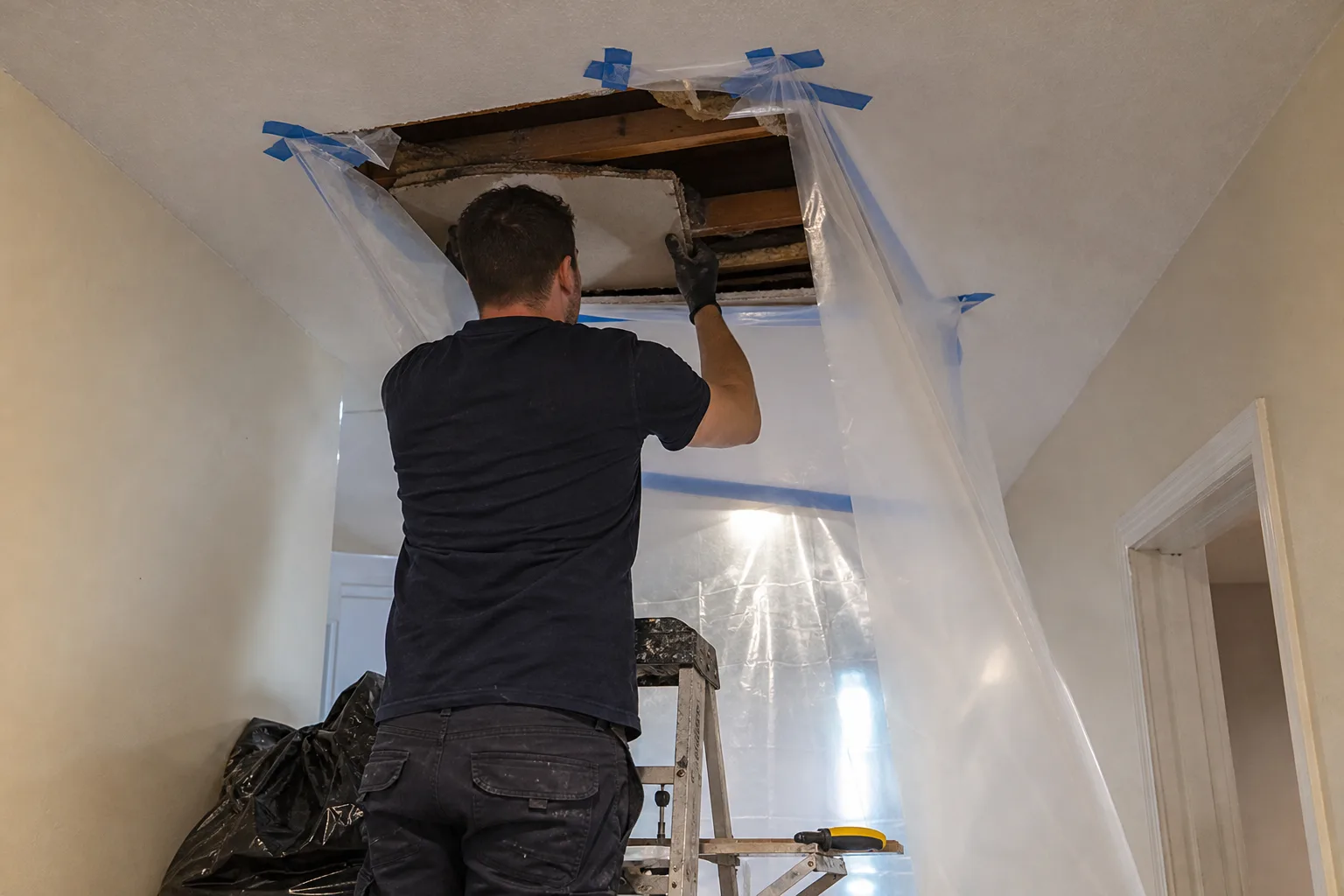
What you are seeing
Water along the wall you share
Duplexes and townhomes sit side by side under one roofline, sharing a party wall and often a continuous slab. Kitchens, baths and laundry rooms are frequently placed back to back across that wall, so a leak on either side reaches it early.
- Wet carpet at the party wall
A supply line or drain inside the shared wall, or an appliance against it, is leaking.
- Garage water on both sides
A water heater or washer in an attached garage has spilled across a slab both homes share.
- Downstairs ceiling stain
An upstairs laundry, bath or water heater in your own townhome has leaked into the floor below.
- Neighbor reports damp drywall
Water from your side has crossed under the party wall.
Safety protocol
Garage water heaters and shared circuits
Stay out of wet rooms on your side, and warn your neighbor to keep clear of their outlets if water reached them.
If water is still reaching the party wall or your neighbor's side, stop the source and tell them now, then call about the damage.
(619) 927-7782Triage order
Your moves when you share a wall
Stop the source
Close the valve at the appliance or the main for your side; in many duplexes each side has its own.
Tell the neighbor
Let the household next door know which wall the water reached, so they can pull furniture back and check their side.
Reach the HOA or owner
In a townhome community, report it to the association; in a duplex, tell the owner of the other side if that is not you.
Photograph both sides
Ask your neighbor for pictures of their side of the wall alongside yours.
How it works
How water crosses a party wall
Most party walls are two separate stud walls with an air gap or insulation between them, standing on one shared slab. Water on your side runs under your bottom plate, across the slab under the gap and up into the drywall on the neighbor's side.
In a two-story townhome, water from an upstairs laundry or bath also drops through your own floor into the kitchen or living room below. It can then reach the party wall at the bottom and cross over to the next home.
Local detail
Attached homes on one concrete slab
West Chula Vista grew in the 1950s through the 1970s largely with single-story stucco on slab-on-grade foundations and copper lines run in or under the concrete. If your attached home sits on a slab like that, say on the call which side the water started on, so moisture mapping covers the floor on both sides of the wall.
Technique
Drying both sides of the party wall
- Two-sided readings
Moisture readings run along the party wall in both homes to find where the wet edge stops.
- Baseboard and plate access
Removing baseboards on each side, or drilling small holes at the plate line, lets air into both stud walls.
- Matched drying
Equipment runs on both sides at once, so one home does not keep feeding water back to the other.
- Upper-floor cavity
For a townhome upstairs leak, drying reaches the floor framing between your two stories.
When you call, say whether you own one or both sides, whether the neighbor knows, and which floor the leak started on.
Phase order
Two homes, one drying schedule
The party wall dries as one assembly, so drying in your home and your neighbor's runs together and ends when both sides read dry. Stopping early on one side lets that side wet the other again.
For a leak that stayed inside your own townhome, the upstairs source room dries first and the ceiling and walls below follow.
Scope: Emergency extraction and structural drying clearance only. Structural rebuild and finishing carpentry are contracted separately.
Service area
Chula Vista ZIP codes
- 91909
- 91910
- 91911
- 91912
- 91913
- 91914
- 91915
- 91921
Every responding technician is independent. Before work begins, confirm the technician's license, insurance and pricing with them directly.
Common questions
Duplex and townhome questions
Who handles water that crossed into the home next door?
That depends on who owns each side, your association's rules and where the leak started, so keep records from both homes. Drying both sides together still comes first.
What if you own both sides of the duplex?
Then the decisions are yours, but your tenant on the other side needs to hear about the water, the equipment and any rooms that go out of use.
What details help a San Diego County duplex or townhome call?
Which side the water started on, whether it crossed the party wall, whether the neighbor knows, and whether the leak began upstairs or down.
Water damage keeps spreading until it is dried.
Call and describe the damage in Chula Vista: where the water came from, what is wet and how long it has been there.