Tell your tenant to stay clear of water near outlets and appliances, and to tell you which outlets the water reached so you can mention them on the call. Ask them to keep children and pets out of the area.
Service · Chula Vista, CA
Investment Property Water Damage in Chula Vista, CA
Your tenant just called about water under the sink, a soaked carpet or a dripping ceiling, and you are nowhere near the house. Investment property water damage puts you in charge of a home you do not live in, with tenants, access and records to manage while the water spreads. Have the tenant close the main or the fixture valve, confirm everyone is safe, and call about the water at your Chula Vista rental.
What you are seeing
The call from your tenant
As a rental owner, you usually hear about water secondhand, and often late. Ask your tenant what they see, and match it to one of these:
- Water pooling now
A supply line, water heater or toilet keeps leaking, and the main needs to close first.
- Soft or stained floor
A slow leak under a sink, dishwasher or toilet has run for a while without anyone reporting it.
- Ceiling drip
A leak in the attic, the roof or an upstairs bathroom is reaching the room below.
- Damage between tenancies
You or your property manager found it during a turnover walk-through.
Safety protocol
Your tenant's safety, over the phone
If the water came from a toilet or a drain, tell them to treat it as dirty water, keep it off their skin and avoid mopping it into other rooms.
If your tenant still sees water spreading, walk them to the shutoff and keep them clear of wiring, then call about the damage.
(619) 927-7782Triage order
Steps you can take from wherever you are
Guide the shutoff
Walk your tenant to the main or the fixture valve over the phone, or send a property manager or a trusted contact.
Ask for photos
Have the tenant send pictures of the source, the water and each wet room before anything moves.
Arrange access
Agree on entry with your tenant, follow your lease and the state's entry-notice rules for work after the emergency, and get a key to whoever meets the crew.
Start a loss file
Save the texts, photos, plumbing receipts and the date your tenant first reported the water.
Talk about living space
If a bedroom, bathroom or kitchen goes out of use, talk with your tenant about how they will manage while it dries.
How it works
Why rental leaks surface late
Tenants often live with a slow drip under a sink or a rocking toilet for a while before they report it, especially when the leak looks small.
By then water has soaked the cabinet base, the subfloor or the pad under the carpet. Turnover is another blind spot. A rental between leases can leak with nobody living there, and a wet wall can look dry behind fresh paint.
Local detail
Tenants, open windows and the marine layer
Much of the year a marine layer of cool, moist air hangs over the San Diego coast and bay, heaviest in May and June. Tenants in Chula Vista often open windows to air out a wet room, but that damp air slows drying, so the room needs mechanical drying, tracked with moisture readings.
Technique
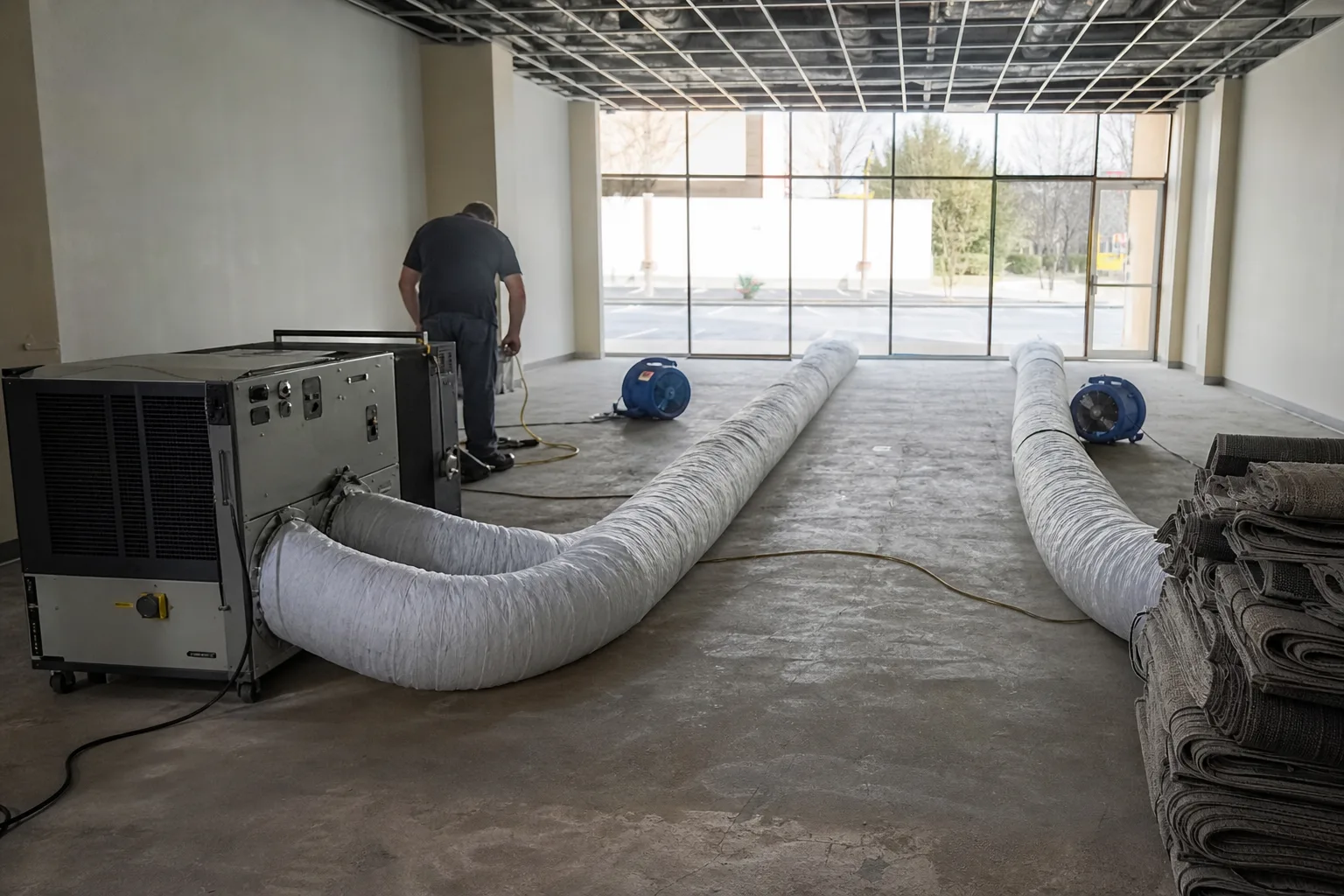
Drying a rental while tenants live there
- Tenant-aware setup
Equipment goes where your tenant can still reach the kitchen, a bathroom and the exits.
- Toe-kick access
Taking off the kick plate under a sink or dishwasher lets dry air reach the cabinet base and the floor beneath.
- Pad and carpet decisions
Wet pad usually comes out, and the carpet may dry in place if the water was clean.
- Readings you can keep
The moisture readings and photos from each visit belong in your property file.
When you call, say whether the rental is occupied, who can open the door, and how to reach both you and your tenant.
Phase order
Occupied rental or empty unit
With tenants living there, drying works around their daily routine, and the equipment runs until each room reads dry. Ask your tenant to leave the machines running and to keep doors set the way the drying plan needs.
An empty rental between leases can dry with rooms closed off and equipment running undisturbed, which often shortens the drying. Either way, the readings decide when the unit can turn over or return to normal use.
Scope: Emergency extraction and structural drying clearance only. Structural rebuild and finishing carpentry are contracted separately.
Service area
Chula Vista ZIP codes
- 91909
- 91910
- 91911
- 91912
- 91913
- 91914
- 91915
- 91921
Every responding technician is independent. Before work begins, confirm the technician's license, insurance and pricing with them directly.
Common questions
Rental owner water damage questions
Can your tenant call about the damage directly?
Yes, a tenant can describe the water and the house, but you as the owner make the decisions about the work. Agree with your tenant on who calls, and share your number for follow-up.
What should you keep for your rental's records?
Keep the tenant's first report, dated photos, plumbing receipts and every moisture reading. A clear record helps when you talk with your carrier, your manager or the next tenant.
What should a San Diego County landlord say on the call?
Whether the rental is occupied, where the water came from, whether it is off, which rooms are wet and who can provide access.
Water damage keeps spreading until it is dried.
Call and describe the damage in Chula Vista: where the water came from, what is wet and how long it has been there.