Wait until the fire department tells you the structure is safe to enter. Heat can weaken ceiling joists and stair treads, and a soaked ceiling can drop without warning.
Service category · Chula Vista, CA
Fire and Smoke Damage Restoration in Chula Vista, CA
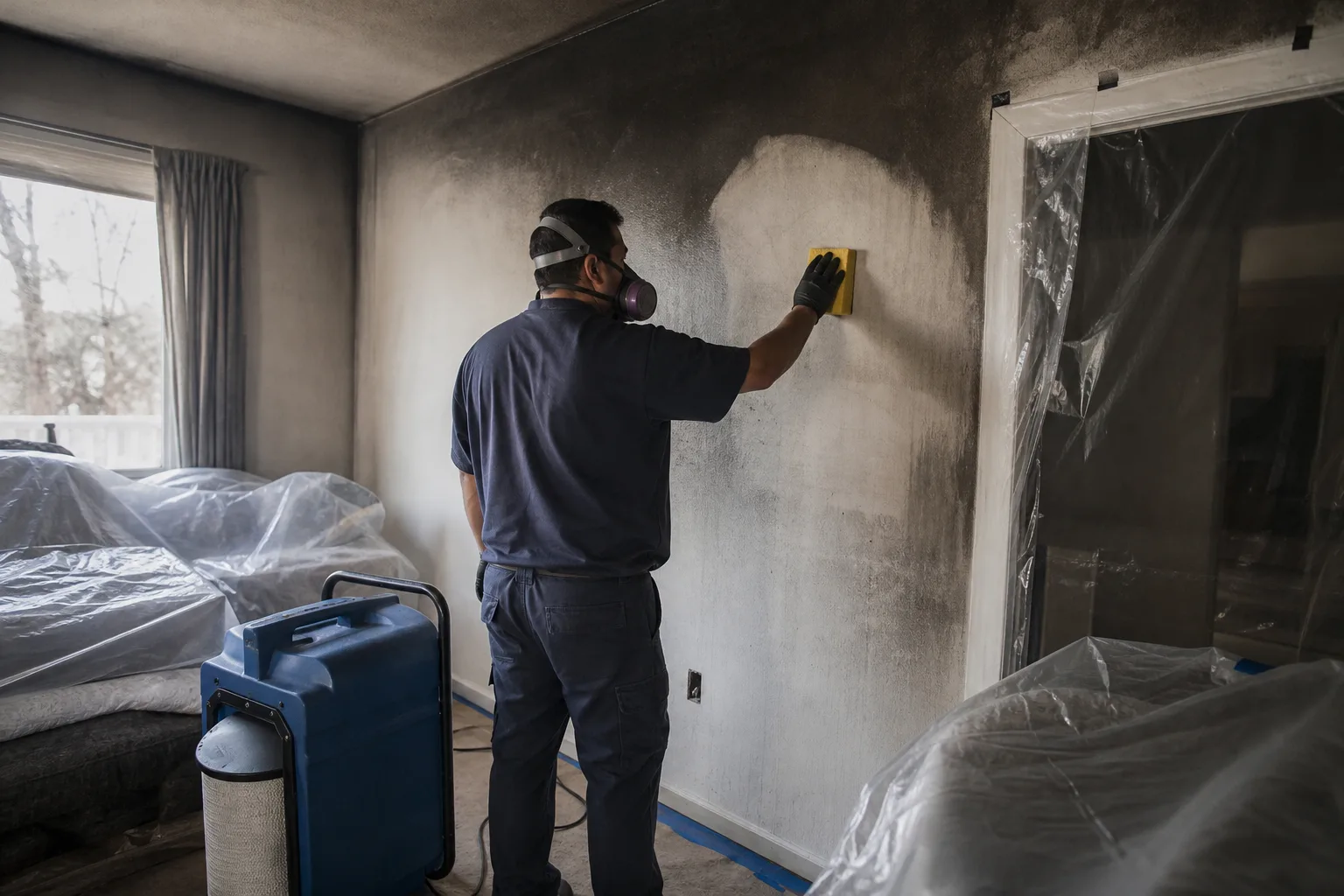
Smoke has stained your ceilings, soot coats the counters, and the water firefighters used is still soaking the carpet. Fire and smoke damage restoration starts with three problems at once: acidic soot, odor that travels into every room, and water left in the walls and floors. Stay out until fire officials clear entry, keep the heating and air system off, and call to describe the fire damage in your Chula Vista home.
What you are seeing
What a fire leaves behind in your home
The flames may have reached one room, but the damage rarely stops there. Look for these signs once fire officials let you back inside:
- Black or gray film
Soot settled on walls, ceilings, blinds and cabinet tops, often far from the burned room.
- A sharp, lingering smell
Smoke odor sits in carpet, upholstery, clothing and ductwork, even where you see no soot.
- Wet ceilings and carpet
Water from hoses soaked drywall, insulation and flooring in and around the fire area.
- Broken windows or a cut roof
Firefighters opened the structure to vent heat and smoke, and those openings now let weather and trespassers in.
Choose your situation
Choose the situation that matches yours
Safety protocol
Before anyone goes back into the house
Keep the heating and air system off so it cannot pull soot through the ducts into clean rooms. Leave any utility the fire department turned off where it is, and wear gloves and a particle mask when you go in.
If hose water is still dripping through a ceiling or soot covers your rooms, keep the air system off and call to describe the fire damage.
(619) 927-7782Triage order
Your first moves once the fire is out
Secure the openings
Ask on the call about closing broken windows, forced doors and any roof opening, so rain, damp air and trespassers stay out.
Keep the system off
Leave the thermostat off until the ducts and filter come clean, since the blower spreads residue through the whole house.
Leave the soot alone
Skip the wet cloth and the household spray: water smears soot and drives it into porous surfaces.
Photograph each room
Take dated pictures of the burned area, the soot, the water and every damaged belonging before anything moves.
Take only essentials
Collect medications, documents and phones, and leave sooty or soaked contents where they are.
How it works
Why smoke damage spreads beyond the burned room
Hot smoke rises and pushes into every space the air can reach. It slips through gaps around outlets and light fixtures, into attics and closets and through the return ducts, then drops soot wherever it cools against a surface.
Soot carries acid from whatever burned. On chrome, glass, grout and finished wood it starts to etch and yellow, so residue that wipes off at first can leave a stain that stays.
Firefighting water adds a second problem. It soaks drywall, insulation and carpet pad, mixes with ash into a gray slurry, and keeps wicking through the structure long after the fire is out.
Local detail
Bay air and a house left open
Cool, damp air drifts in off the bay through much of the year and lingers longest in late spring and early summer. With windows broken or a roof vented after a fire in Chula Vista, that moist air settles on soot and wet drywall, so the openings get closed up and mechanical drying runs instead of airing the house out.
Drying metrics
Signs the damage reaches past what you can see
Run a fingertip along a switch plate or the top of a door in a room that looks untouched. A dark smudge means smoke reached that room, and the cleanup has to include it.
Press on the drywall under a wet ceiling and along the baseboards. Soft or cool spots mean hose water is still inside the wall, and it keeps spreading until moisture readings find it and drying reaches it.
Triage order
Why calling promptly matters after a fire
Every day soot sits on a surface, the acid works deeper. Every day hose water stays in the walls, more drywall, insulation and flooring stays saturated, and smoke odor settles further into fabric.
Call once the fire is out and fire officials clear the structure. Say which rooms burned, which ones show soot or smell of smoke, how much water the firefighters used, and whether windows, doors or the roof stand open.
Scope: Emergency extraction and structural drying clearance only. Structural rebuild and finishing carpentry are contracted separately.
Service area
Chula Vista ZIP codes
- 91909
- 91910
- 91911
- 91912
- 91913
- 91914
- 91915
- 91921
Every responding technician is independent. Before work begins, confirm the technician's license, insurance and pricing with them directly.
Common questions
Fire and smoke damage questions
When can you go back into your home after a fire?
Only after the fire department clears the structure. Even then, keep children and pets out of sooty rooms, and wear gloves and a particle mask while you collect essentials.
Should you start scrubbing the soot yourself?
No. Wet cloths and household cleaners smear soot and push it deeper into grout, wood and fabric. Leave it, photograph it, and describe it on the call.
What details help on a San Diego County fire damage call?
Which rooms burned, which rooms smell of smoke, whether hose water reached the ceilings or floors, whether the air system ran after the fire, and which openings stand open.
Water damage keeps spreading until it is dried.
Call and describe the damage in Chula Vista: where the water came from, what is wet and how long it has been there.