Hose water pours in at volume and under pressure, so it finds every gap. It runs through attic insulation, saturates ceiling drywall, travels down wall cavities and spreads across the floor and under baseboards.
Service · Chula Vista, CA
Emergency Board-Up and Fire Water Mitigation in Chula Vista, CA
The fire is out, but hose water is dripping through your ceilings, ash has turned to gray sludge on the floor, and the firefight left windows broken and a hole in the roof. Fire and water damage restoration starts before any soot comes off: close the openings, then get the water out. Keep everyone out of the wet rooms, and call to describe the fire and water damage in your Chula Vista home.
What you are seeing
When the firefight leaves your home open and wet
Putting out a house fire takes a lot of water and often some force. Once the engines leave, you may face any of these:
- Hose water in rooms that never burned
Water ran down walls, through light fixtures and across floors far from the flames.
- Ash slurry underfoot
Ash and soot mixed with water into a gray sludge on carpet, tile and bare concrete.
- Broken windows and forced doors
Firefighters cleared glass and opened doors to reach the fire and let heat escape.
- A cut or burned roof
A vent hole or a burn-through leaves the attic and the ceilings below open to the weather.
Safety protocol
Hazards in a home that is wet and opened up
- Soaked ceilings
Waterlogged drywall and insulation weigh far more than dry material. Stay out from under any ceiling that sags or drips.
- Broken glass and nails
Wear hard-soled shoes and gloves around window frames and forced doors.
- Power and gas
Leave any utility the fire department turned off where it is, and keep cords and lamps off wet floors.
- An unsecured house
Remove medications, documents and valuables you can reach without risk, since an open home invites theft.
If hose water is still dripping or your windows and roof stand open, keep everyone out of the wet rooms and call about the fire and water damage.
(619) 927-7782How it works
What firefighting water does inside the structure
This water picks up ash, soot and burned debris on the way down. That slurry carries residue into carpet pad, drywall paper and the pores of the concrete.
An open structure works against drying. Outdoor air and any rain reach the wet materials through broken windows and the roof opening, so the house cannot dry until those openings close.
Technique
Closing the openings, then getting the water out
- Temporary closure
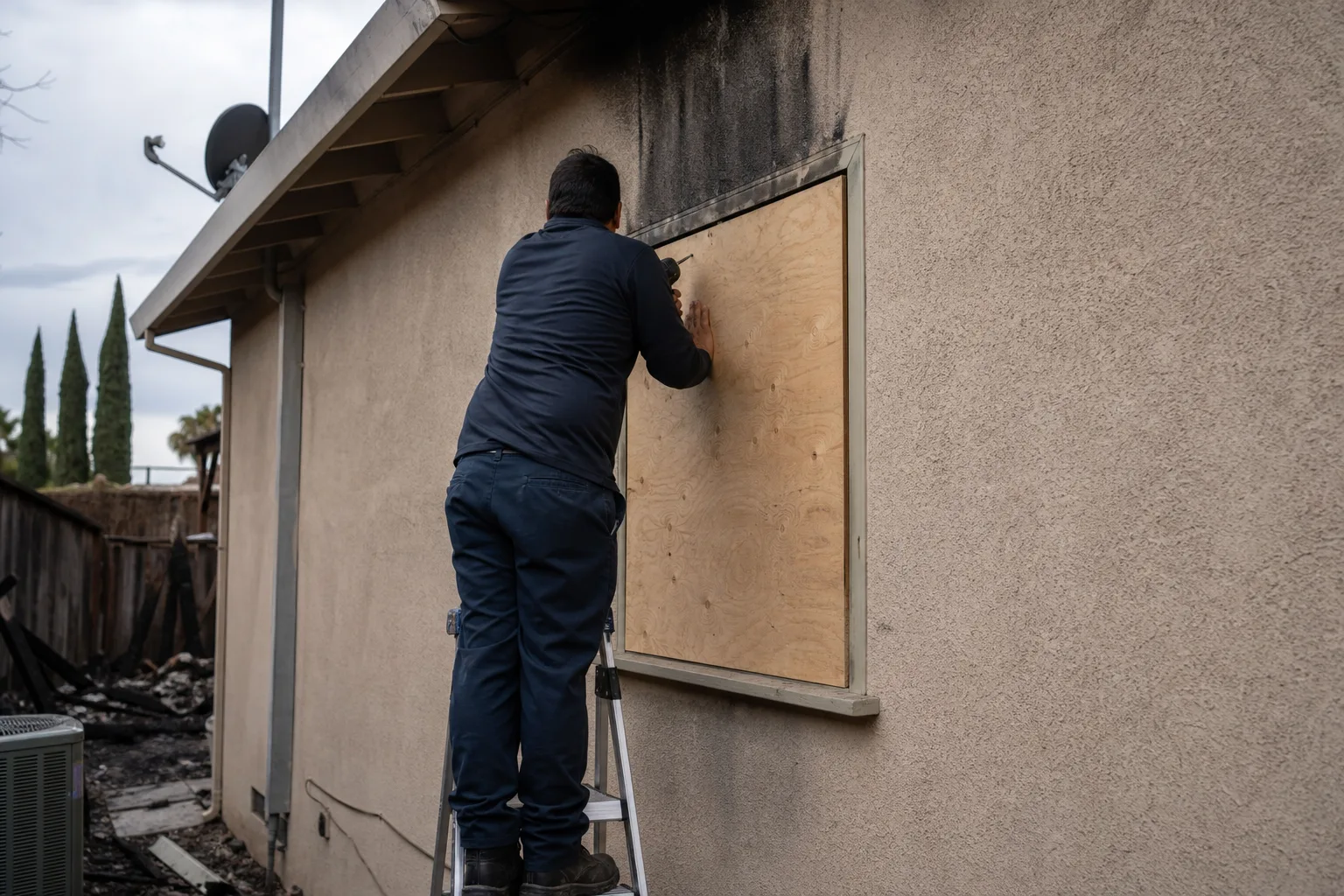
Plywood or rigid sheeting goes over broken windows and forced doors, and heavy plastic sheeting covers the roof opening, so weather and trespassers stay out.
- Slurry extraction
Extractors and pumps pull ash-laden water from carpet, pad and hard floors before it dries into the surfaces.
- Soaked ceiling material
Collapsed or waterlogged drywall and wet insulation come down so the framing above can dry.
- Closed-space drying
With the openings shut, dehumidifiers and air movers work on sealed indoor air instead of fighting the outdoors.
- Moisture mapping
Readings across walls, ceilings and the floor trace how far the hose water traveled from the fire.
Have ready when you call: how many windows and doors stand open, whether the roof is open, and which rooms took water.
Local detail
Firefighting water on a slab floor
Much of west Chula Vista is single-story stucco on concrete slabs, built from the 1950s into the 1970s. On a slab, hose water has no crawlspace to drain into, so it soaks the concrete and the bottom of every wall it touches. Say on the call that your home sits on a slab, so moisture mapping covers the floor.
Phase order
The order that keeps the damage from growing
The sequence runs secure, extract, dry, then clean. Soot cleaning waits until the water is out, because wet soot smears, and drying waits until the openings close, because outside air keeps feeding moisture back in.
Three things set the pace: how much water the firefighters used, how far it traveled from the burned room, and whether the roof stands open. A small kitchen fire put out at the stove is a far smaller job than a fire fought through the attic.
Scope: Emergency extraction and structural drying clearance only. Structural rebuild and finishing carpentry are contracted separately.
Service area
Chula Vista ZIP codes
- 91909
- 91910
- 91911
- 91912
- 91913
- 91914
- 91915
- 91921
Every responding technician is independent. Before work begins, confirm the technician's license, insurance and pricing with them directly.
Common questions
Board-up and firefighting water questions
Should you sweep up the wet ash yourself?
No. Wet ash smears into carpet and grout and tracks residue into clean rooms. Keep foot traffic off it and describe it on the call.
Can you stay in the home while the water dries?
It depends on how much of the home burned or took water and whether the power is on. Plan to stay elsewhere if the fire department left the utilities off.
Why close the openings before drying starts?
Drying pulls moisture out of a closed space. With windows broken and the roof open, outdoor air keeps replacing the dry air, and rain can soak the materials again.
What details help on a San Diego County fire water call?
Which rooms burned, which rooms took hose water, whether any ceiling sags, how many openings stand open, and whether the home sits on a slab.
Water damage keeps spreading until it is dried.
Call and describe the damage in Chula Vista: where the water came from, what is wet and how long it has been there.