Water on a floor finds every seam. It slides under baseboards, soaks the tack strip at the carpet edge, and climbs drywall by capillary action, often a foot or more above the visible waterline.
Service · Chula Vista, CA
Emergency Water Removal in Chula Vista, CA
Water is pouring from a burst line, spreading out from a failed water heater, or running in under the door after a storm. Emergency water removal starts with what you do in the first minutes: stop the flow, keep everyone away from wet outlets, and get people out of the water. Then call and describe the depth, the source and how long the water has been standing in your Chula Vista home.
What you are seeing
When water is pouring in or already standing
You hear water hissing behind a wall, find the garage floor flooded around the water heater, or watch storm water push across the threshold. Standing water is an emergency because it keeps spreading while you decide what to do.
- Burst supply line
Close the fixture valve or your main shutoff, then open a low faucet to drain the pressure.
- Failed water heater
Close the cold-water valve on top of the tank, stay out of the water around its base, and say on the call whether it runs on gas or electricity.
- Storm water at the door
Move belongings up and away from the entry, and keep out of water that crossed the yard or street.
If water is still flowing, close the main shutoff, keep clear of wet outlets, and call to describe the depth.
(619) 927-7782How it works
How standing water spreads through a room
The longer it stands, the more it changes. Clean supply water picks up contaminants from the floor and the wall cavity, and storm water arrives carrying soil, oil and debris from outside, which places it in the contaminated category from the start.
Safety protocol
Keep away from these before anything else
- Live circuits
Never wade into a room where water touches outlets, cords or a power strip.
- Gas appliances
If you smell gas near a flooded water heater or furnace, get everyone outdoors before you do anything else.
- Contaminated water
Wear boots and gloves around storm or sewage water, and wash any skin it touches.
Technique
What gets the bulk water out
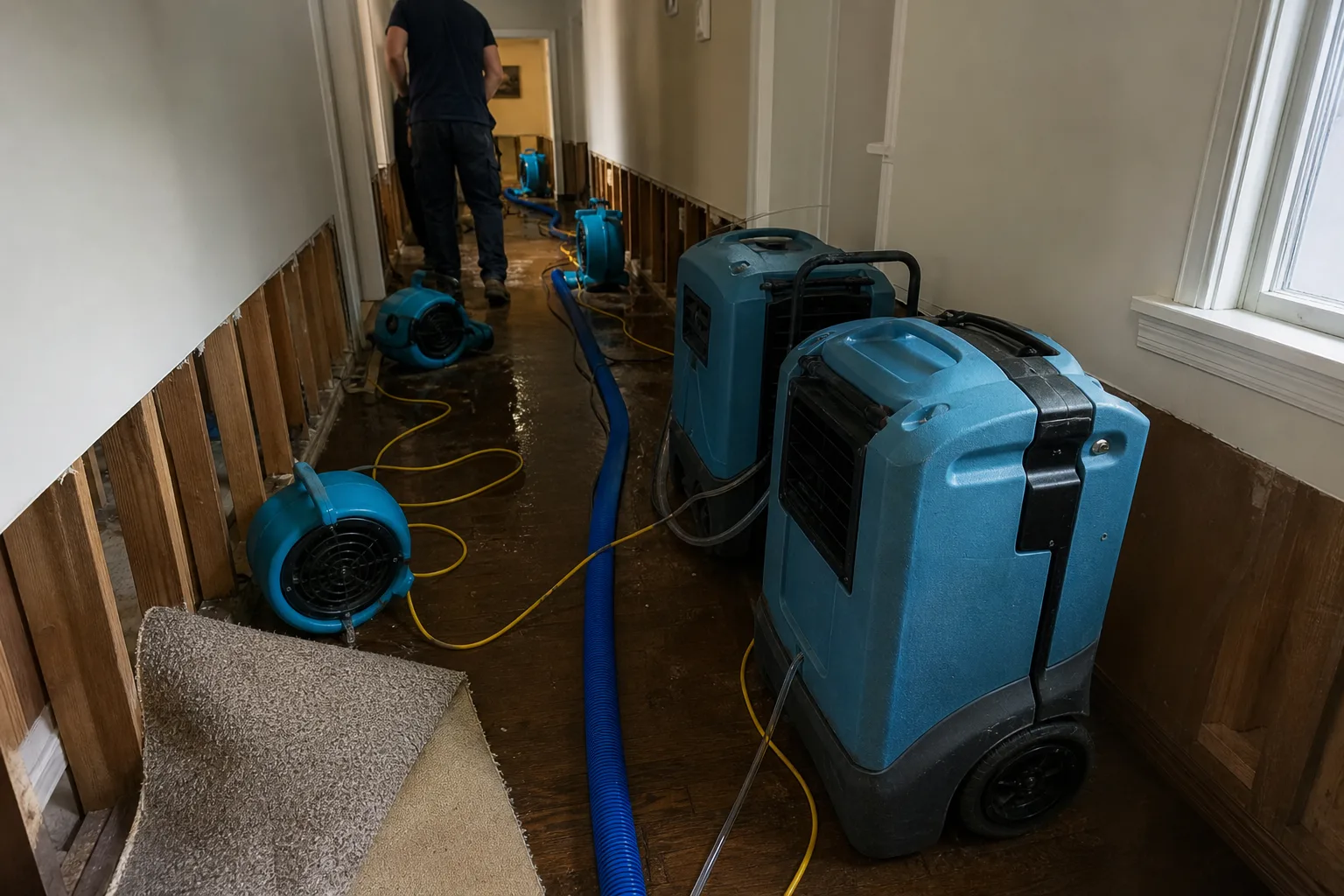
Removal equipment is matched to the depth and the surface. Knowing what you have helps you describe it on the call.
- Submersible pumps
Used where water stands deep enough to cover your shoes, such as a flooded garage or sunken room.
- Truck-mounted or portable extractors
Pull water out of carpet, pad and tile with strong suction and wands.
- Weighted extraction tools
Press water out of carpet and pad that would otherwise stay soaked underneath.
- Moisture meters
Map the edge of the wet area so removal follows the water, not just the puddle.
Your part is to keep the area clear: move furniture you can lift, keep pets away, and leave wet drywall and carpet where they are until someone takes readings.
Local detail
Storm runoff across Sweetwater and Otay ground
Chula Vista drains through the Sweetwater River basin to the north and the Otay River watershed to the south, and a heavy storm can push runoff across low yards, patios and garage thresholds before the channels carry it to the bay. If storm water reached your floor, say where it came in, whether it ran off a slope or the street, and how long it stood.
Phase order
What sets the pace once the flow stops
Removal follows a fixed order: stop the source, make the area safe, extract the bulk water, then map the moisture and set up drying. No step should start before the one ahead of it is finished.
Three things decide how long the work runs: how deep the water stood, which category it falls into, and how long it sat before extraction began. A shallow, clean spill caught early is a much smaller job than storm water that soaked in overnight.
Scope: Emergency extraction and structural drying clearance only. Structural rebuild and finishing carpentry are contracted separately.
Service area
Chula Vista ZIP codes
- 91909
- 91910
- 91911
- 91912
- 91913
- 91914
- 91915
- 91921
Every responding technician is independent. Before work begins, confirm the technician's license, insurance and pricing with them directly.
Common questions
Standing water questions
How deep does water get before a pump comes in?
Once water covers the soles of your shoes across a room or pools in a garage in San Diego County, wands alone fall behind and a submersible pump does the heavy lifting. Measure the depth against a shoe or a ruler and say the number on the call.
Is it safe to walk through the water?
Not if it reaches outlets, cords or appliances, and not if it came from a storm or a drain. Stay clear of wet outlets first, and wear boots and gloves around any water that came from outside.
Should you mop or bail the water yourself?
Mopping a small spill on tile is fine. For water that covers a room or soaks carpet, move belongings, keep everyone out, and call, because towels leave most of the water in the pad and the wall base.
What details help on the call?
Give the source, the depth, the rooms it reached and how long it has stood. Say whether it smells foul or came in from outside, because that sets how the water has to be handled.
Water damage keeps spreading until it is dried.
Call and describe the damage in Chula Vista: where the water came from, what is wet and how long it has been there.