Soot carries acids from the burned material. On bathroom chrome, window glass, grout, stone and finished wood it begins to etch and yellow, so residue that wipes off at first can leave a lasting stain.
Service · Chula Vista, CA
Soot, Smoke and Odor Cleanup in Chula Vista, CA
A gray film covers your walls, black strings hang from the ceiling corners, and the smoke smell follows you into rooms the fire never touched. Soot, smoke and odor cleanup is a race against residue: soot is acidic and starts staining surfaces, and odor settles deeper into carpet, fabric and drywall the longer it sits. Keep the heating and air system off, leave the soot untouched, and call to describe the cleanup your Chula Vista home needs.
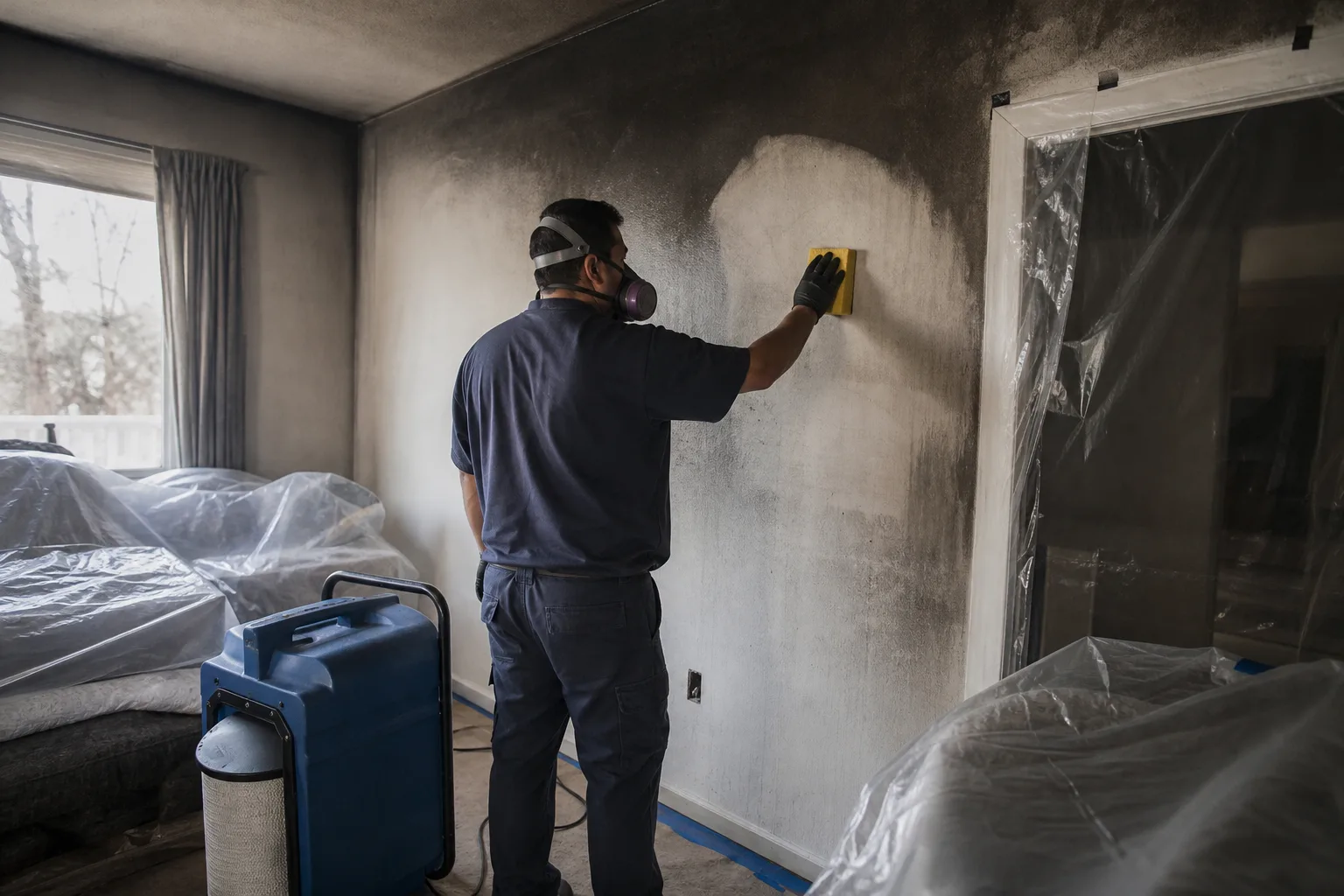
What you are seeing
Reading the residue in each room
Soot looks different depending on what burned, and that difference changes how it comes off. Walk each room and match what you see:
- Dry, powdery soot
Loose gray or black dust from a hot fire of wood or paper that smudges at a touch.
- Oily, sticky soot
A dark film that smears instead of brushing off, left by burning plastics, foam or synthetic fabric.
- Protein residue
A thin yellowish film from a kitchen fire that burned food. You may barely see it, yet it carries the strongest odor.
- Soot webs
Dark strings in ceiling corners, where charged soot particles linked together. They are not cobwebs.
- Odor with no visible soot
Smoke reached the room through the ducts or a wall gap and left its smell in fabric and drywall.
If soot covers your walls or the smoke smell keeps spreading, keep the air system off, leave the residue alone, and call about the cleanup.
(619) 927-7782How it works
How soot and odor attack your surfaces
Odor is a separate problem from the visible film. Smoke particles work into drywall paper, carpet fibers, upholstery and the insulation inside walls, and they release the smell again each time the room warms up or the air turns humid.
Safety protocol
What you should leave alone
- Wet wiping
Water and household sprays smear soot and set it into porous surfaces.
- Running the air system
The blower pulls residue out of the ducts and spreads it into clean rooms.
- Scented sprays and candles
Perfume layers over smoke odor without removing the residue that holds it.
- A household vacuum
Fine soot passes through a standard filter and blows back into the room.
Technique
How soot and odor come out, layer by layer
- HEPA vacuuming
Loose soot comes off with high-efficiency filtered vacuums before any liquid touches the surface.
- Dry chemical sponges
Vulcanized rubber sponges lift dry soot from walls and ceilings without smearing it.
- Residue-matched cleaners
Degreasers suited to oily or protein residue follow once the loose layer is gone.
- Air scrubbers
HEPA filtration runs throughout the work and captures particles stirred into the air.
- Odor neutralization
Thermal fogging, hydroxyl generators or ozone reach odor inside porous materials, and rooms stay empty while ozone runs.
- Ducts and filter
The air system comes clean before it runs again, so it cannot carry residue back out.
- Odor-blocking sealer
Where smell stays in framing or subfloor, a sealer over the cleaned surface keeps it from bleeding back.
When you call, say what burned, what the soot looks like in each room, and whether the air system ran after the fire.
Local detail
Damp coastal air and lingering smoke odor
Through late spring and early summer, a gray blanket of cool, damp air drifts in from the bay and settles over Chula Vista. Humid air revives smoke odor in fabric and drywall, so keep your windows closed after the cleanup and expect dehumidification to run alongside odor treatment.
Phase order
What sets the order and length of the cleanup
Cleanup moves from the lightest rooms toward the burned area, so residue from the dirtiest zone does not drift back onto cleaned surfaces. Within each room it runs top to bottom: ceiling, walls, contents, then floor.
Three things set the pace: the type of residue, how many rooms the smoke reached, and how long the soot sat before cleaning began. Oily and protein residues take more passes than dry soot, and odor treatment often continues after the surfaces look clean.
Scope: Emergency extraction and structural drying clearance only. Structural rebuild and finishing carpentry are contracted separately.
Service area
Chula Vista ZIP codes
- 91909
- 91910
- 91911
- 91912
- 91913
- 91914
- 91915
- 91921
Every responding technician is independent. Before work begins, confirm the technician's license, insurance and pricing with them directly.
Common questions
Soot and smoke odor questions
Can smoke-damaged clothes and fabrics come clean?
Many can. Leave them unwashed, since a home washer can set oily soot, and bag them apart from clean items. Say on the call how many items you have and what fabrics they are.
Why does the smoke smell come back on humid days?
Odor particles sit inside porous materials, and moisture in the air releases them again. Cleaning only the visible surfaces leaves that source in place.
Will opening the windows clear the smoke smell?
Fresh air thins the smell for a while, but it leaves behind the residue that holds it. Keep the house closed and the air system off, and describe the odor on the call.
What details help on a San Diego County soot cleanup call?
What burned, which rooms show soot or smell of smoke, whether the soot looks dry or oily, and whether the air system ran after the fire.
Water damage keeps spreading until it is dried.
Call and describe the damage in Chula Vista: where the water came from, what is wet and how long it has been there.