Copper supply lines under a slab sit in soil and against concrete, and the metal can wear through from abrasion, corrosion or ground movement over decades. Once it opens, line pressure pushes water into the soil and the concrete without stopping.
Service · Chula Vista, CA
Slab Leak Water Damage in Chula Vista, CA
A patch of floor feels warm under your bare feet, you hear water hissing with every tap closed, or your water bill jumped with no new use. Those signs point to a slab leak: a pressurized supply line leaking under the concrete, with water damage spreading through the floor before you see it. Close the main, mark the warm spot, and call about the leak in your Chula Vista home.
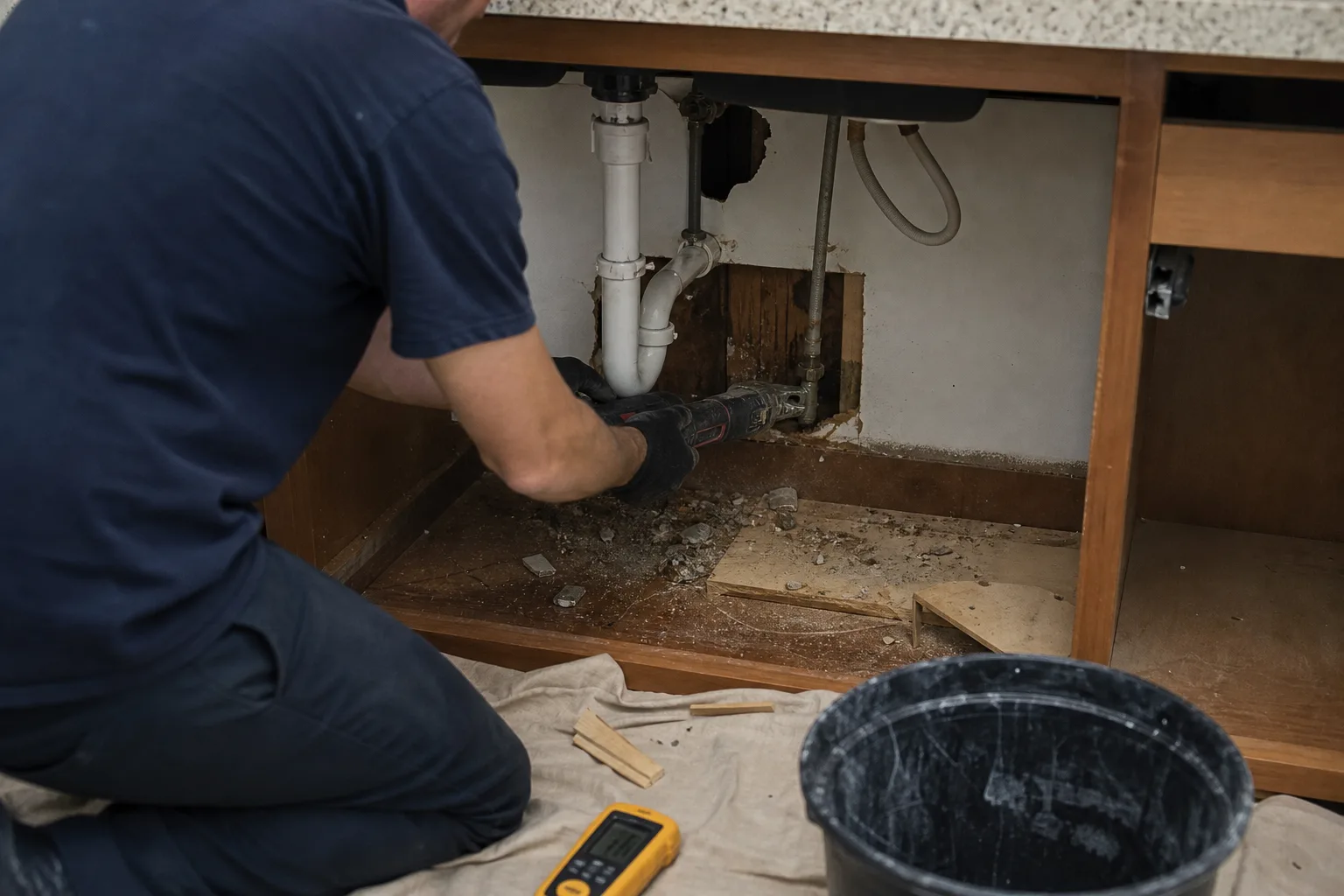
What you are seeing
Clues that a line under the floor is leaking
A slab leak rarely starts with a puddle. You notice it through heat, sound or your water bill first.
- Warm spot
A hot-water line leaking under the slab heats the concrete above it, so one patch of tile or carpet feels warm.
- Hissing or running sound
You hear water moving under the floor or in a wall when nothing is on.
- Meter still moving
The dial or leak indicator on your water meter keeps turning with every fixture off.
- Damp from below
Carpet turns damp from underneath, wood or laminate cups, or tile grout turns dark in one area.
Triage order
Confirm it, then close the main
Run the meter test
Turn off every faucet and appliance and watch the meter's dial or leak indicator. If it moves, water is escaping.
Close the main
Turn the main shutoff clockwise to stop the flow into the line under the slab.
Mark the spot
Put tape around the warm or damp area so you can point to it later.
Trace the hot line
If the warm spot runs along the path from the water heater, a hot line is the likely source; say so on the call.
Lift what can wick
Pull rugs, boxes and furniture off the damp area.
If the meter is still moving with every fixture off, close the main now and call about the leak under your floor.
(619) 927-7782How it works
How a hidden copper leak spreads through concrete
Concrete wicks water upward. It reaches the underside of carpet pad, wood and laminate and the bottom of the drywall, so the wet area on top can be much larger than the leak point below.
Rain seeping in along the outside edge of a slab can look similar. A leak that shows in dry weather and moves the meter comes from a supply line, not from ground water.
Technique
Mapping the wet floor
- Moisture mapping
Readings across the floor, room by room, trace how far the water spread from the leak point.
- Flooring choices
Carpet and pad can lift for drying, while glued-down wood or laminate may have to come up to reach the concrete.
- Wall bases
Readings at the bottom of nearby walls show where the water climbed into drywall and baseboards.
- Leak location
Finding and fixing the line is plumbing work, and floor drying waits until it is done.
On the call, say the home sits on a slab, describe what you noticed first, and mention whether the meter moved with everything off.
Local detail
Postwar slabs and the copper beneath them
Builders set much of west Chula Vista's 1950s-to-1970s housing on concrete slab-on-grade, often running copper supply lines in or under it. If your home is one of them, say so on the call so moisture mapping covers the whole floor; locating and fixing the line itself is plumbing work.
Phase order
The line first, the floor second
No drying holds while the line keeps leaking. The plumbing fix or reroute comes first, then floor and wall drying starts from the readings mapped across the slab.
Concrete gives up water slowly, so expect the slab to lag behind drywall and carpet. Repeat readings continue until the floor matches a dry room.
Safety protocol
Hot water under your feet
A leak on a hot-water line can heat a floor enough to feel uncomfortable. Keep children and pets off a hot spot, and keep the main closed while you wait for the call back.
Scope: Emergency extraction and structural drying clearance only. Structural rebuild and finishing carpentry are contracted separately.
Service area
Chula Vista ZIP codes
- 91909
- 91910
- 91911
- 91912
- 91913
- 91914
- 91915
- 91921
Every responding technician is independent. Before work begins, confirm the technician's license, insurance and pricing with them directly.
Common questions
Slab leak questions
Can a slab leak stop on its own?
No. A pressurized line keeps losing water until someone closes the main or fixes the line, and the wet area under the floor keeps growing.
Is a warm floor always a slab leak?
Not always, since sun through a window can warm a floor too. A warm spot plus a moving meter or a hissing sound strongly suggests a hot-water line leaking under the slab.
Does the flooring have to come up?
Readings decide it. Carpet can often lift for drying, while glued-down flooring over wet concrete may have to come up so the concrete can dry.
What should a San Diego County slab leak call include?
Say that the home sits on a slab, where the warm or damp spot is, whether the meter moves with everything off, and whether a plumber has found the line yet.
Water damage keeps spreading until it is dried.
Call and describe the damage in Chula Vista: where the water came from, what is wet and how long it has been there.