Floodwater that crossed a yard or street counts as Category 3, the most contaminated class of water damage. It can carry sewage from overwhelmed lines, motor oil and animal waste, even when it looks clear.
Service · Chula Vista, CA
Flood Damage Restoration in Chula Vista, CA
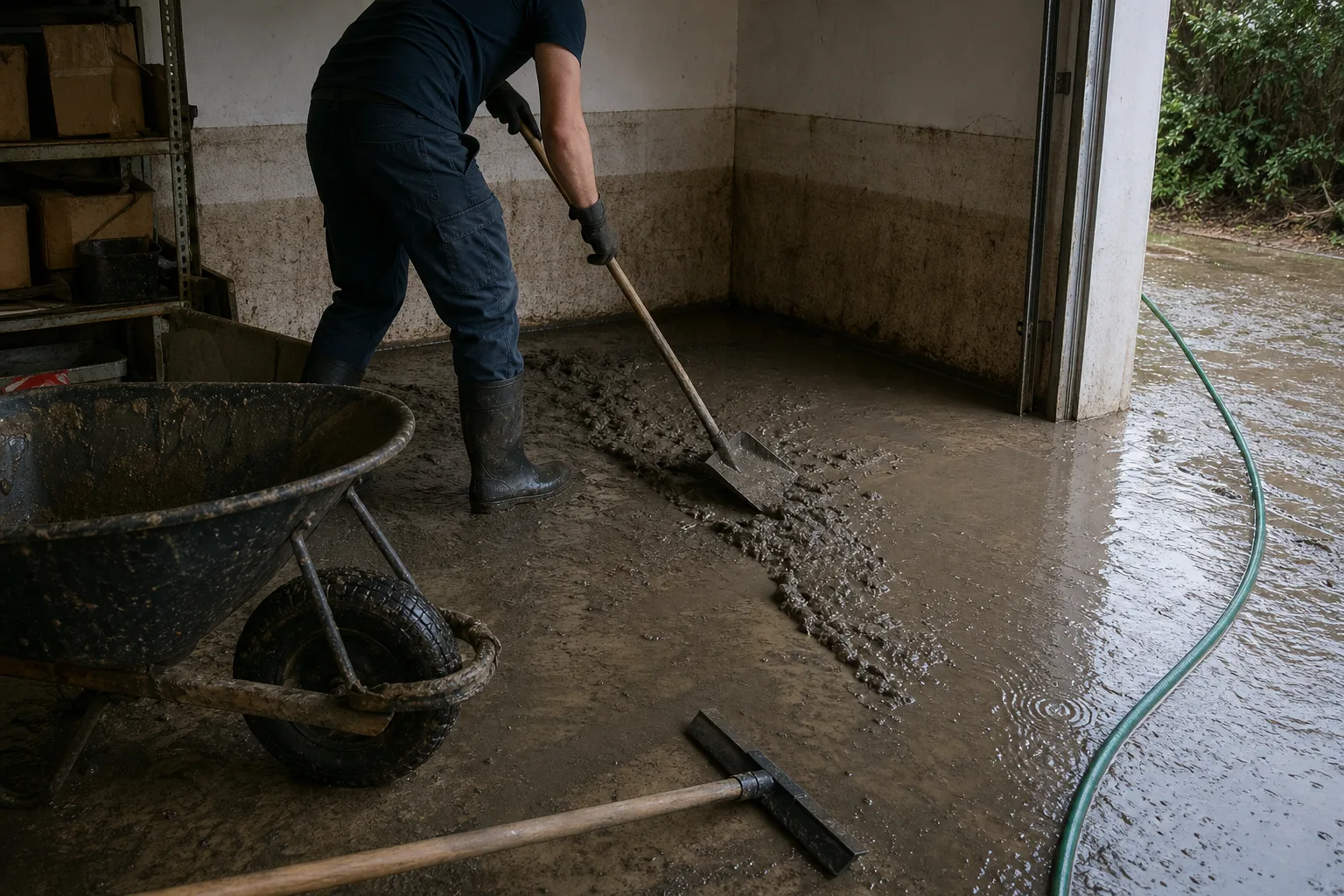
Floodwater came in across your floors, and now a layer of mud and silt sits where it drained, with a dark line marking how high it rose on the walls. Flood damage restoration treats everything that water touched as contaminated, because overland floodwater carries soil, oil, lawn chemicals and sewage in from outside. Keep bare skin out of the wet rooms, stay clear of their outlets, and call to describe the waterline in your Chula Vista home.
What you are seeing
Mud on the floor and a line on the walls
Overland floodwater leaves a different scene from a burst pipe. Walk the edge of the wet area in boots and note what you find:
- Silt deposit
A film of mud or fine sand across tile, concrete and the bottom of cabinets.
- A waterline
A brown or gray band on walls, doors and furniture legs at the height the flood reached.
- Soaked furnishings
Upholstery, mattresses and cardboard boxes that sat in the flood.
- An outdoor smell
Earthy, oily or sewer odors carried in from the yard and street.
If floodwater left mud in your rooms, keep skin out of it, stay clear of wet outlets, and call to describe the waterline.
(619) 927-7782Safety protocol
Treat it as Category 3 from the start
Wear rubber boots and gloves, keep children and pets out, and wash any skin it touches with soap. Stay away from outlets and appliances in every wet room, and mention them on the call so the crew can coordinate a safe power disconnection.
How it works
What floodwater leaves inside porous materials
Silt rides in suspended in the flow and settles wherever the current slows: in carpet pad, behind baseboards and inside the bottom of wall cavities. Once it settles, it holds moisture and contaminants in place long after the surface water drains.
Porous materials such as carpet, pad, upholstery and the lower stretch of drywall absorb the contaminated water itself. Drying them does nothing about what the flood carried in, which is why the protocol sorts every material by whether it can come clean at all.
Technique
Category 3 protocol, step by step
- Muck-out
Shovels and squeegees clear the silt before any drying equipment runs.
- Porous removal
Carpet, pad, soaked insulation and flood-cut drywall come out and go to disposal.
- Antimicrobial washdown
Crews scrub and treat hard surfaces, studs and the slab wherever the flood stood.
- Containment
Plastic barriers and air filtration keep contaminated dust out of the dry rooms.
- Structural drying
Air movers and dehumidifiers bring the cleaned framing and concrete down to measured goals.
Before you call, photograph the waterline in each room and anything you plan to throw out, with a tape measure in the frame.
Local detail
Floodwater on a single-level slab
Much of west Chula Vista sits on concrete slab-on-grade foundations with every room on one level, so floodwater that clears the threshold meets no step or stair to stop it. Expect it to have reached every connected room, and moisture mapping has to reach the base of walls far from where it came in.
Phase order
Clean before dry, never the reverse
The order holds on every flood job: clear the mud, remove what cannot come clean, wash and treat what stays, and only then start drying. Drying a room with silt still in the wall base locks the contamination in place.
How high the flood rose and how long it stood decide the pace. A shallow sheet that drained overnight leaves less to remove than water that stood across several rooms through the next day.
Triage order
What to keep and what to let go
Hard, nonporous items such as metal, glass and sealed dishes can usually come through a wash and stay. Mattresses, stuffed furniture, paper and cardboard that sat in floodwater rarely come clean, so set them aside and photograph them before they leave.
Scope: Emergency extraction and structural drying clearance only. Structural rebuild and finishing carpentry are contracted separately.
Service area
Chula Vista ZIP codes
- 91909
- 91910
- 91911
- 91912
- 91913
- 91914
- 91915
- 91921
Every responding technician is independent. Before work begins, confirm the technician's license, insurance and pricing with them directly.
Common questions
Flood restoration questions
Can flood-soaked carpet come clean and stay?
Not after overland floodwater. Carpet and pad hold the contaminants deep in the fibers and the foam, so they come out, even when the stain looks light.
Is clear floodwater still contaminated?
Yes. Floodwater carries bacteria and chemicals you cannot see, so treat clear water the same as muddy water and keep your skin away from it.
Should you hose the mud out yourself?
Adding more water spreads the silt deeper into the wall base and the slab joints. Scoop loose mud into bags with gloves on, and leave the walls and flooring for the call.
What should you describe on a San Diego County flood call?
Say where the water entered, how high the waterline sits, how many rooms it reached, and whether it smelled of sewage or fuel.
Water damage keeps spreading until it is dried.
Call and describe the damage in Chula Vista: where the water came from, what is wet and how long it has been there.