Flash flooding moves as sheet flow: a shallow, swift layer of water that sweeps across slopes and pavement after a cloudburst. Its speed lets it carry branches, gravel and trash that a slow rise would leave behind.
Service · Chula Vista, CA
Flash Flood Cleanup in Chula Vista, CA
A sudden torrent poured down your street, piled branches and mud against the house, and left deep water standing in your garage or living room. Flash flood cleanup starts with getting people safe and the deep water out, because water that high keeps pushing into your walls, appliances and wiring. Stay out of the water while the power is on, wait for the flow outside to stop, and call to describe the depth in your Chula Vista home.
Safety protocol
Before you step back inside
- Power first
If water reached outlets or the electrical panel, leave the power off and let the utility or an electrician restore it.
- Gas smell
Leave the house and call the gas utility from outside if you smell gas.
- Shifted structure
Stay out of rooms where doors jam, walls bow or the floor feels uneven.
- Hidden hazards
Debris can hide nails, broken glass and rodents the torrent pushed inside.
If the water inside is still rising or flowing, get everyone to higher ground outside and wait for it to stop before you call.
If deep water is standing inside, stay out while the power is on, wait for the flow to stop, and call to describe the depth.
(619) 927-7782What you are seeing
Debris piles and deep water
A flash flood leaves a different mess from a slow leak. Look for:
- Debris dams
Branches, trash and mud packed against fences, gates and the base of doors.
- Deep standing water
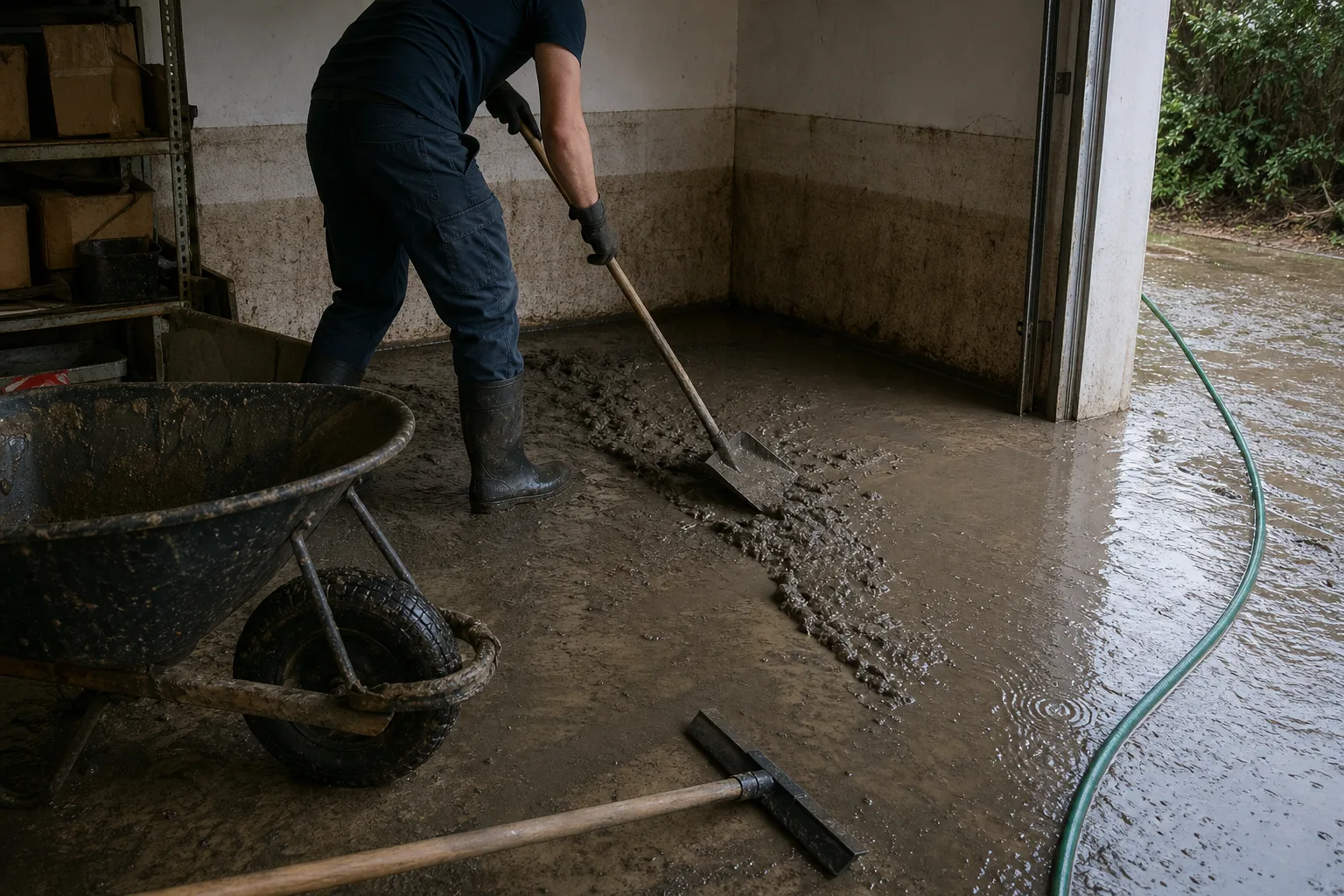
Water over your ankles in a garage, a sunken room or across the whole floor.
- Wrack lines
A ragged line of leaves and grit on the walls where the surge peaked.
- Floated furniture
Couches, bins and appliances lifted or shoved out of place.
How it works
Why swift water does more harm
When that debris jams against a door or fence, it acts as a dam and raises the water on the uphill side. The higher water then presses through door gaps and weep holes and soaks drywall far above where a slow flood would stop.
Technique
Deep extraction before anything else
- Debris clearance
Branches and mud piled at the entry come out first so water can leave and crews can get in.
- Trash pumps
Large pumps that pass grit and small debris lift deep water out of garages and rooms.
- Submersible pumps
A pump at the lowest point keeps pulling as the level drops.
- Truck-mounted extraction
Once the water turns shallow, high-suction wands pull the rest from floors and carpet.
- Sludge removal
Crews shovel and squeegee out the mud left after pumping, before drying begins.
Clear what you safely can from the outside of doorways with gloves and a rake, but leave anything heavy or tangled with wires.
Local detail
Storm bands that come in a series
Winter atmospheric-river storms often reach Chula Vista as a string of heavy bands rather than a single burst, so a second downpour can follow before your home has dried. Clear the debris at your doors between bands, and say on the call whether more rain is in the forecast.
Phase order
Pump down, then work the flood protocol
Flash flood cleanup runs in two phases. First comes the emergency phase: stop the inflow, clear debris and pump the deep water out. Then comes the slower phase: remove soaked materials, wash, treat and dry the structure with readings.
The deeper the water stood, the more of each wall and each piece of furniture it soaked. Water that stood above the outlets usually means the lower part of every wall in those rooms comes out.
Triage order
Carry out what matters most
Once the water is down and the power is off, carry photos, papers and medicine to a dry place first. Lay wet papers flat or seal them in a freezer bag in the freezer, and leave heavy furniture where it sits.
Scope: Emergency extraction and structural drying clearance only. Structural rebuild and finishing carpentry are contracted separately.
Service area
Chula Vista ZIP codes
- 91909
- 91910
- 91911
- 91912
- 91913
- 91914
- 91915
- 91921
Every responding technician is independent. Before work begins, confirm the technician's license, insurance and pricing with them directly.
Common questions
Flash flood cleanup questions
When is it safe to start cleaning up?
Wait until the water outside has stopped flowing, no outlet or cord sits in standing water, and no one smells gas. Then photograph everything before you move it.
Should you run a shop vacuum on deep water?
A shop vacuum holds a few gallons at a time and draws power right next to the water. Leave deep water for pumps, and keep cords and plugs away from it.
What happens to appliances that sat in the water?
Leave them unplugged and off. Water heaters, furnaces and washers that flooded need a qualified technician to check them before anyone turns them back on.
What should you say about a flash flood on a San Diego County call?
Give the depth inside, how suddenly it rose, whether debris is blocking doors, and whether the power and gas are off.
Water damage keeps spreading until it is dried.
Call and describe the damage in Chula Vista: where the water came from, what is wet and how long it has been there.