A bowed drywall ceiling can hold gallons of water on its back. Keep everyone out from under it, lay a tarp and a bucket on the floor nearby, and stay clear of any lamp or fan in that ceiling.
Service · Chula Vista, CA
Roof Leak Water Damage in Chula Vista, CA
Water is dripping from your ceiling while it rains, a drywall seam is sagging, or a stain grows every time a storm passes. Roof leak water damage moves from the top down: rain gets past the roof covering, soaks the attic insulation, then weighs on the ceiling drywall until it bows. Put a bucket under the drip, clear the room below any sag, and call to describe where the water lands in your Chula Vista home.
What you are seeing
Drips that start when the rain does
A roof leak reveals itself through the ceiling, often well away from where the water got in. Watch the ceiling during the next downpour and jot down which of these you find:
- Active drip
Water falling from a seam, a popped screw head or a ceiling lamp while rain is falling.
- Bowing seam
Drywall bellying down between joists, occasionally with a split along the tape.
- Widening blotch
A brown patch that gets a little larger after each storm.
- Wet wall corner
Water trickling down the inside of an outside wall from the overhang above.
If water is dripping through your ceiling, catch it in a bucket, clear the room below any sag, and call to describe the drip.
(619) 927-7782Safety protocol
When the ceiling is holding water
Stay off a wet roof in the rain or at night. Wet shingles and tile turn slick, and a fall from any roof causes serious injury.
How it works
How rain reaches your ceiling
Rain gets past the roof covering at split flashing, a lifted shingle or tile, a worn vent collar or a gap where the roof meets a wall.
Once under the covering, it travels downhill along the roof deck and the rafters, so the drip often turns up several feet from the actual opening.
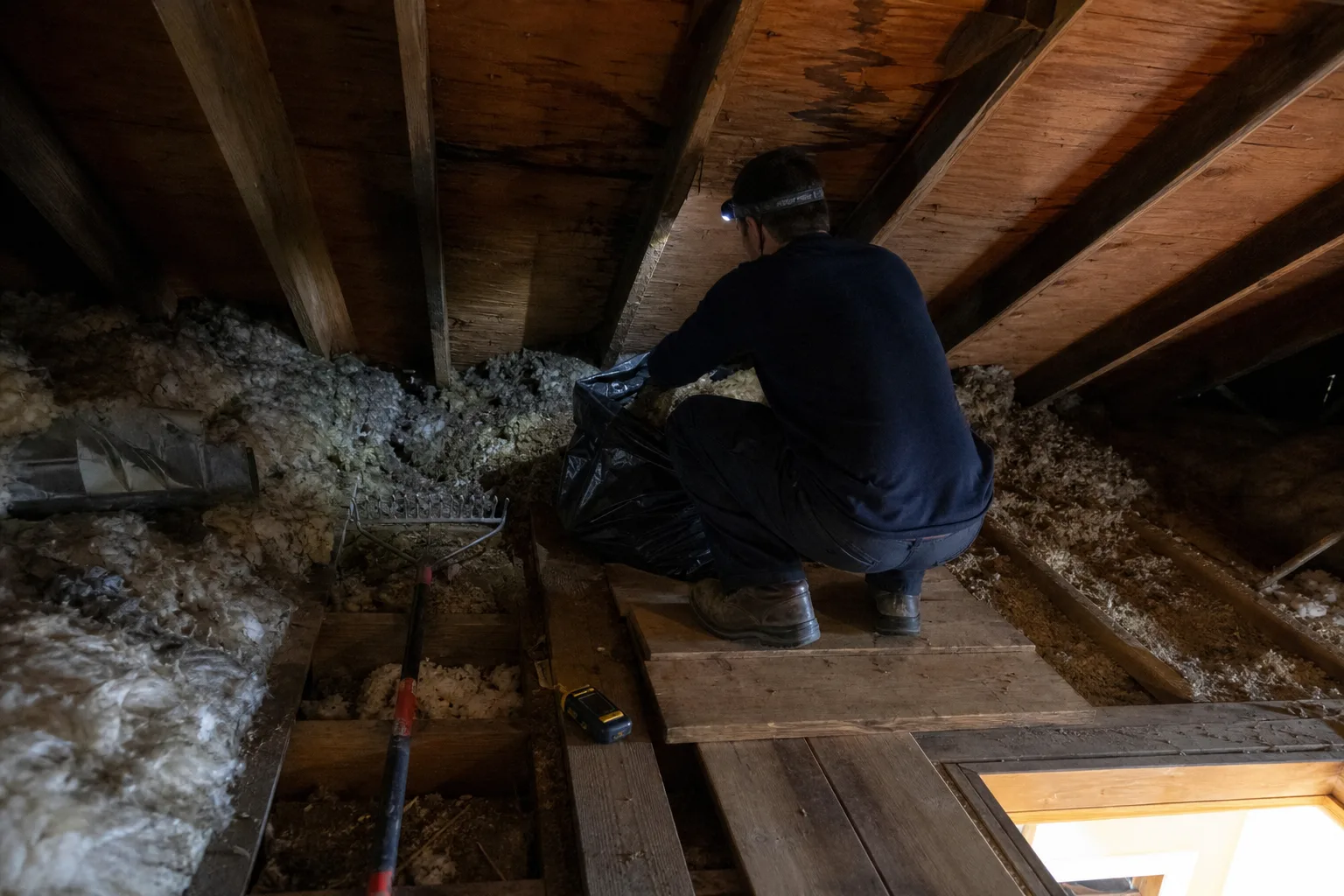
When it finally drops, it lands on the attic insulation. The insulation soaks it up and holds it against the back of your ceiling drywall, which turns limp, gets heavier and bows between its screws.
Technique
Following the water back up
- Ceiling moisture map
Readings across the drywall find the full wet area, not just the stain.
- Drip path tracing
Wet trails on the deck and rafters point from the ceiling back toward the entry point.
- Ceiling bay removal
A soaked, bowing section comes down carefully so the trapped water can escape.
- Insulation pull
Saturated insulation above the wet bay comes out so the joists can dry.
- Directed drying
Air movers and a dehumidifier work on the joists, deck and remaining drywall.
Sealing the roof itself is roofing work, separate from the drying. Ask a roofer about a temporary cover if more rain is in the forecast.
Local detail
Marine air and a soaked roof deck
Along San Diego Bay a marine layer of cool, moist air settles over Chula Vista for long stretches of the year, so attic vents pull in damp air instead of drying a soaked deck. Do not count on attic ventilation to finish the job; mechanical drying, checked with readings on the deck and joists, does it.
Phase order
Weathertight first, then the readings
Drying cannot finish while the next storm can still get in, so the roof opening has to close before the equipment can win. Once the roof keeps rain out, the order runs from ceiling removal, to insulation removal, to drying the framing with readings at each stage.
A leak you catch during its first storm usually soaks a single ceiling bay. One that has dripped through several storms tends to leave stained joists, soggy insulation across a wider area and a ceiling that has already dropped.
Documentation
Notes to keep through the storm
- Rain timing
Write down when the drip started and stopped compared with the rain.
- Drip spots
Mark each drip on the floor with tape and photograph the ceiling above it.
- Bucket volume
Write down roughly how full each bucket got.
- Roofer notes
Keep the name and findings of any roofer who checked the opening.
Scope: Emergency extraction and structural drying clearance only. Structural rebuild and finishing carpentry are contracted separately.
Service area
Chula Vista ZIP codes
- 91909
- 91910
- 91911
- 91912
- 91913
- 91914
- 91915
- 91921
Every responding technician is independent. Before work begins, confirm the technician's license, insurance and pricing with them directly.
Common questions
Roof leak questions
Why is the drip nowhere near the roof damage?
Water under the roof covering travels down the deck and along the rafters before it drops. The ceiling stain marks where it fell, not where it got in.
Does the whole ceiling always have to come down?
No. Drywall that stays firm and dries to normal readings can stay, while bowing or crumbling sections come out so the water and the wet insulation above can leave.
Can you cover the roof yourself during the storm?
Stay off a wet roof. Catch the water inside with buckets and tarps, and leave work on the roof to a roofer once conditions turn safe.
What should you tell a San Diego County call about a roof leak?
Say where the drip falls, whether it stops when the rain stops, how many storms it has lasted, and whether the ceiling is sagging.
Water damage keeps spreading until it is dried.
Call and describe the damage in Chula Vista: where the water came from, what is wet and how long it has been there.