A sagging ceiling is the one sign that needs action before anything else. Move people, pets and valuables out from under it, and do not poke it with a broom handle while you stand below.
Service · Chula Vista, CA
Ceiling and Wall Water Damage in Chula Vista, CA
A brown ring is spreading across your ceiling, the paint has started to bubble, or a wall feels soft and cool when you press it. Ceiling and wall water damage means water is trapped inside a cavity you cannot see into, and a ceiling holding water can come down. Clear the room below a bulge, stay away from any wet light fixture, and call to describe what you see in your Chula Vista home.
What you are seeing
Rings, bubbles and soft spots
Water inside a ceiling or wall shows itself in a few ways. Each one tells you something about how much water sits behind the surface.
- A brown ring overhead
Water has soaked through the drywall and left its minerals behind as it dried at the edges.
- A bulge or sag
Water is pooling on top of the ceiling drywall, and the weight is pulling it down.
- Bubbling or peeling paint
Water is trapped between the paint film and the wall surface.
- A soft, cool wall
The gypsum core has taken on water and lost its strength.
Safety protocol
When a ceiling can come down
If water is dripping from a light fixture or a ceiling fan, leave its wall switch alone, keep everyone out from under it, and mention it on the call so the crew can coordinate a safe power disconnection. Water and wiring share the same cavity above your head.
If your ceiling is sagging, clear the room below, switch off any wet light fixture, and call to describe the stain.
(619) 927-7782How it works
What water does to gypsum
Drywall is a gypsum core wrapped in paper. Water softens the core, weakens the paper, and adds weight, so a ceiling panel that held for decades can sag between its fasteners and tear loose.
Inside a wall, water runs down the back of the drywall and collects on the bottom plate. Insulation in the cavity holds that water against the framing, so the wall can stay wet long after the stain stops growing.
Technique
Finding where the water went
- Moisture meters
Pin and pinless readings across the ceiling and down the wall show where the wet area ends.
- Thermal imaging
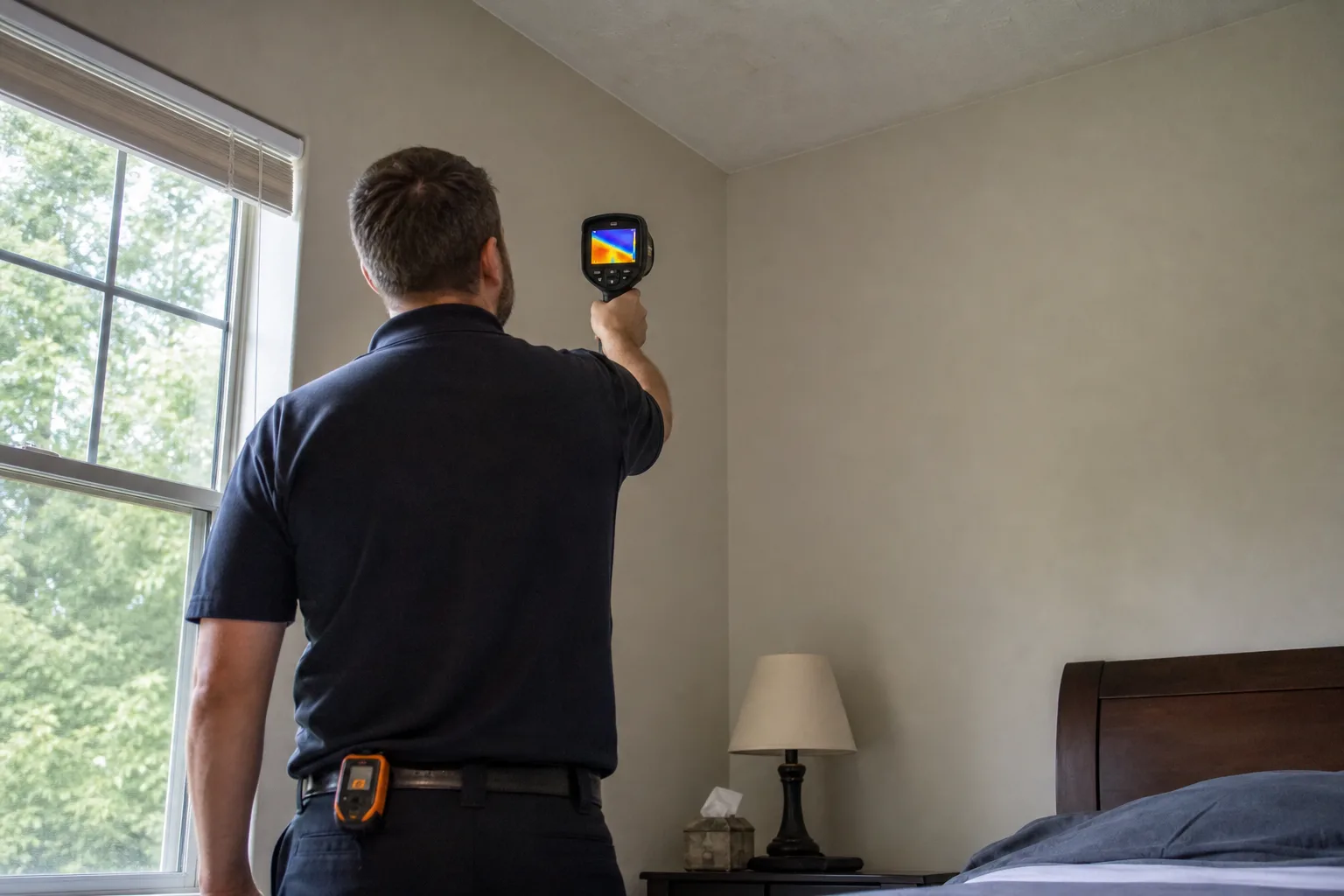
A camera shows cool, wet patches behind the surface so the map is not guesswork.
- Controlled openings
Small holes or a cut at the base let trapped water drain and dry air enter the cavity.
- Wet insulation
Soaked batts are usually pulled, because they hold water against wood and rarely dry well.
Before you call, note when you first saw the stain, whether it grows after rain or after someone runs water, and which fixtures sit near it.
Phase order
Stop the source before opening anything
The order matters here more than anywhere. The source has to stop first, whether it is a roof leak, an attic line or a pipe inside the wall, or any drying you start keeps getting rewetted.
After that comes the moisture map, then any openings in the drywall, then drying with readings until the cavity matches a dry wall. A stain that keeps spreading tells you the source is still active.
Local detail
Single-story homes put the roof right overhead
Many Chula Vista homes are single-story stucco houses, so nothing sits above your ceiling but the attic and the roof. A ceiling stain there points to the roof or to a line running through the attic, so say whether the stain appeared after rain and where it sits in the room.
Scope: Emergency extraction and structural drying clearance only. Structural rebuild and finishing carpentry are contracted separately.
Service area
Chula Vista ZIP codes
- 91909
- 91910
- 91911
- 91912
- 91913
- 91914
- 91915
- 91921
Every responding technician is independent. Before work begins, confirm the technician's license, insurance and pricing with them directly.
Common questions
Ceiling and wall questions
Should you poke a hole to drain a bulging ceiling?
No. Keep clear of the bulge, because the panel can tear loose all at once and drop its water on you. Set out a bucket, move everything from below, and call.
Is a dry stain still a problem?
It can be. A stain that stopped growing may still have wet insulation or framing behind it, so moisture readings, not the stain, tell you the water is gone.
Why does paint bubble before the wall looks wet?
Paint forms a film that holds water against the drywall. The bubble fills first, and the gypsum underneath is usually wetter than the surface suggests.
What should you check in a San Diego County attic?
Only look from the hatch with a flashlight, and do not step between the joists. Note any wet insulation or dripping line, then close the hatch and call.
Water damage keeps spreading until it is dried.
Call and describe the damage in Chula Vista: where the water came from, what is wet and how long it has been there.