Gypsum behaves as a wick. Water climbs it well above the puddle that started it, and its face sheet turns limp and weak as it soaks.
Service · Chula Vista, CA
Drywall and Insulation Water Damage in Chula Vista, CA
The bottom of your drywall has turned chalky, a water line is climbing the wall, or you can hear water dripping inside a cavity. Drywall and insulation water damage hides behind the surface, because the insulation in the wall holds the water against the framing where you cannot see it. Keep away from any wet outlets on that wall, leave the drywall standing, and call to describe the water line in your Chula Vista home.
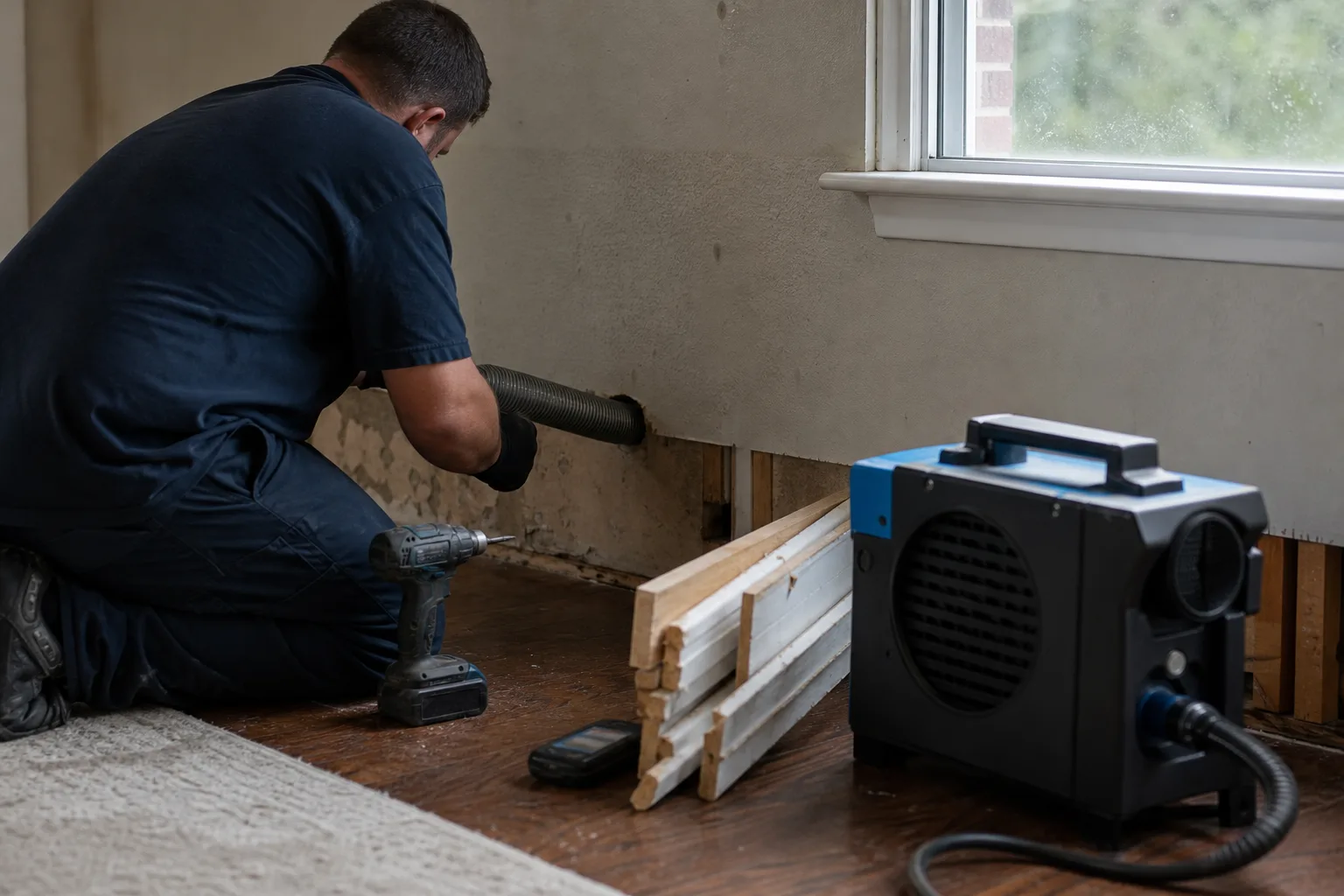
What you are seeing
A water line climbing your wall
Wet drywall rarely looks dramatic at first. Watch for these clues along the lower stretch of your walls:
- A tide line
A faint tan or yellowish band that marks how high the water wicked.
- Chalky or crumbling base
Gypsum that rubs off on your finger or crumbles under gentle pressure.
- Loose tape seams
Joint tape lifting or cracking where two sheets meet.
- Sound inside the wall
Dripping or trickling you can hear with your ear against the drywall.
If your drywall feels soft at the base, stay clear of wet outlets and call to describe how high the water line reaches.
(619) 927-7782How it works
How gypsum and batts hold water
Behind the drywall, fiberglass batts slump and compress when wet, and loose-fill cellulose mats into a dense, soggy layer.
Either one keeps water pinned against the studs and the bottom plate, which is why a wall can stay wet inside long after its face feels dry.
Safety protocol
Electrical boxes inside a wet wall
Outlets and switches sit inside the same cavity the water is filling. If water reached the level of an outlet, leave it alone, do not plug a device into a wall that is still wet, and tell the call which outlets the water reached so the restoration crew can plan a safe power shutoff.
Technique
Opening the wall to reach wet insulation
- Wicking map
Moisture readings up the wall find the highest wet reading, not just the visible band.
- Flood cut
A level cut a little above that height removes the wet gypsum and opens the cavity.
- Insulation removal
Wet batts or cellulose come out, because they rarely dry well in place and keep the framing damp.
- Stud and plate drying
Air movers and dehumidifiers dry the exposed framing until it reads dry.
If you find clean water promptly, drilled openings near the base may be enough to dry a cavity without a full cut. Moisture readings up the wall decide which approach fits.
Local detail
Bottom plates fastened to the slab
Much of west Chula Vista went up from the 1950s through the 1970s on concrete slab-on-grade foundations, so the bottom plate of each wall is fastened directly to the concrete. Water spreading across the slab reaches that plate first, so moisture mapping checks the base of every wall that borders the wet floor.
Phase order
Open, pull, dry, then read
The work runs in a fixed sequence: stop the source, map how high the water went, open the wall, take out wet insulation, then dry the framing with readings at each step. Keep the wall open until the studs and plates match the readings of a dry wall.
Two things set the pace: how high the water wicked and what kind of insulation filled the cavity. A short wicking line in a clean-water wall is a small job, while sewage-soaked drywall and insulation always come out.
Documentation
Measurements worth writing down
- Tide line height
Hold a tape measure against each wet wall and record how many inches up the band reaches.
- Outlet heights
Note whether the water line sits above or below the outlets on that wall.
- Insulation label
If you can see the batt facing through a gap, note the R-value printed on the kraft paper.
- Wall by wall
Label each photo with the room and which wall it shows, so the record reads clearly later.
Scope: Emergency extraction and structural drying clearance only. Structural rebuild and finishing carpentry are contracted separately.
Service area
Chula Vista ZIP codes
- 91909
- 91910
- 91911
- 91912
- 91913
- 91914
- 91915
- 91921
Every responding technician is independent. Before work begins, confirm the technician's license, insurance and pricing with them directly.
Common questions
Drywall and insulation questions
How high should a flood cut go?
It follows the moisture readings, not a fixed height. The cut goes a little above the highest wet reading so that no wet gypsum stays behind.
Can wet insulation dry inside the wall?
Rarely. Batts and cellulose hold water against the studs and lose their shape, so they usually come out and the framing dries in the open.
Why does the wall feel dry but still read wet?
The outer skin dries first while the inner gypsum and the insulation stay wet. A meter reads into the wall beyond what touch can tell you.
What should you measure on the wall before you call in San Diego County?
Say where the water came from, how high the stain climbs, whether the wall is an exterior one, and whether outlets on it are near the water.
Water damage keeps spreading until it is dried.
Call and describe the damage in Chula Vista: where the water came from, what is wet and how long it has been there.